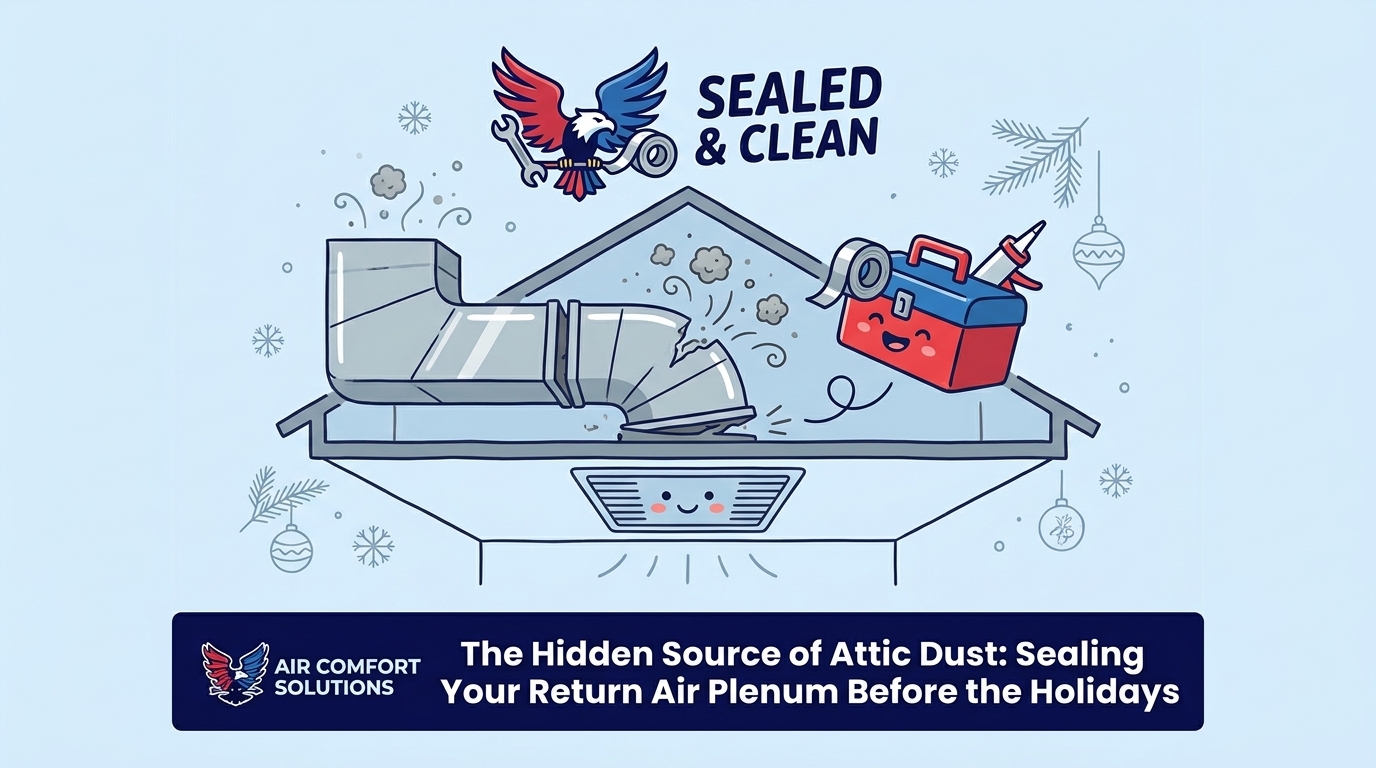
The Value of Sealing Your Return Air Plenum Before the Holidays
Most homeowners buy expensive filters to fix dusty air, not realizing a leaky return plenum in the attic is the real culprit. See why sealing it now saves your holiday gatherings.
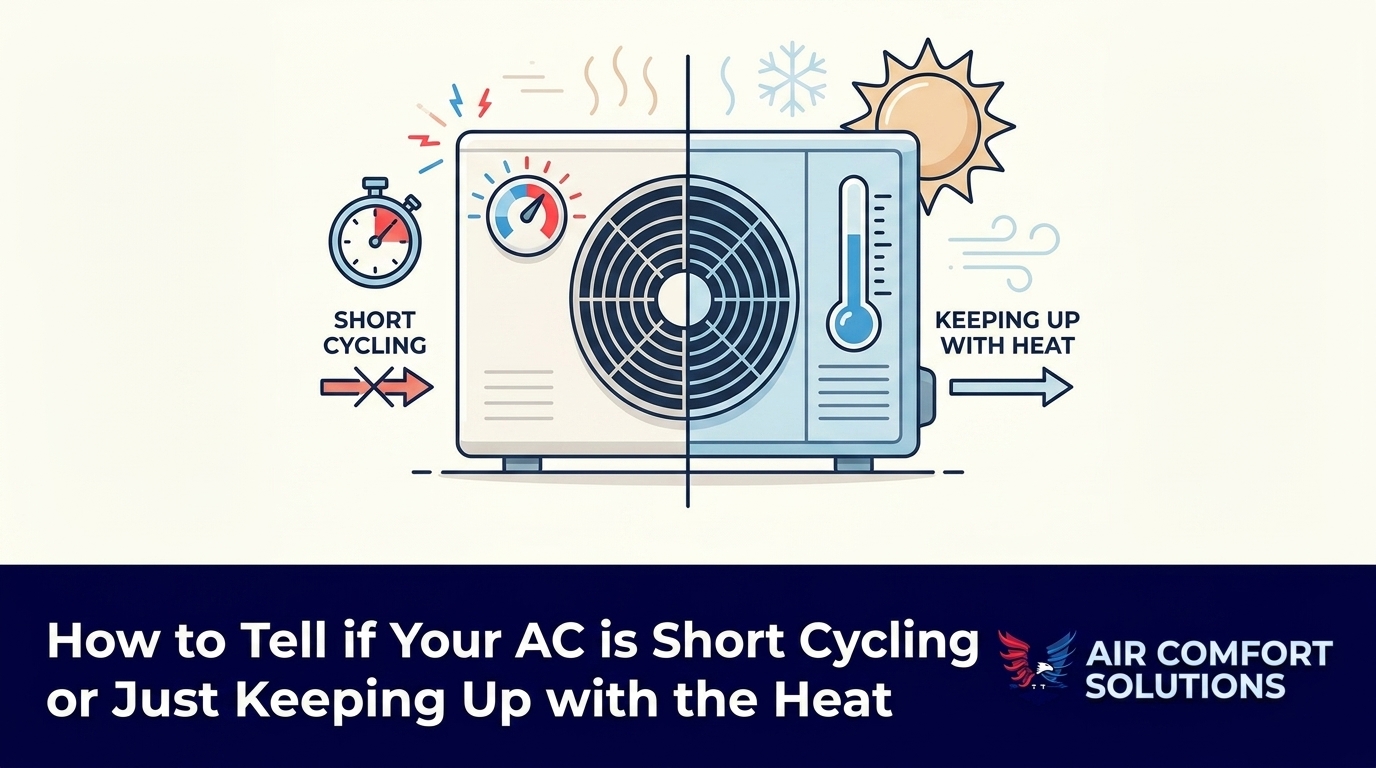
Your AC is running nonstop, but the house still feels uncomfortably warm. That relentless hum of the compressor kicking on, shutting off, and kicking right back on again is enough to put any homeowner on edge. When your system seems to be working overtime, you might find yourself searching for how to tell if your AC is short cycling or just keeping up with the heat. It is a common source of panic, especially when the August extreme late-summer heat sets in and your cooling equipment is pushed to its absolute limits.
However, not all frequent cycling points to a mechanical malfunction. Extreme temperatures fundamentally change the way residential cooling equipment operates. An air conditioner behaves very differently on a mild spring afternoon than it does during a blistering late-summer heatwave. The primary goal here is to help you differentiate between a healthy system that is simply working hard to cool your home and a genuine mechanical failure that requires immediate attention.
Understanding this critical distinction can prevent unnecessary stress, keep your family comfortable, and save you from scheduling an unneeded service visit. If you are concerned about your system's performance after evaluating it, reaching out for professional HVAC services can provide clarity and keep your home cool.
To understand why your air conditioner runs longer and more frequently during peak summer, you have to look at how residential heating and cooling systems are designed. HVAC systems are not arbitrarily chosen off a shelf; they are carefully sized using strict industry formulas known as Manual J calculations. These calculations are based on historical regional temperature averages for your specific area, rather than the absolute peak extreme temperatures of the year.
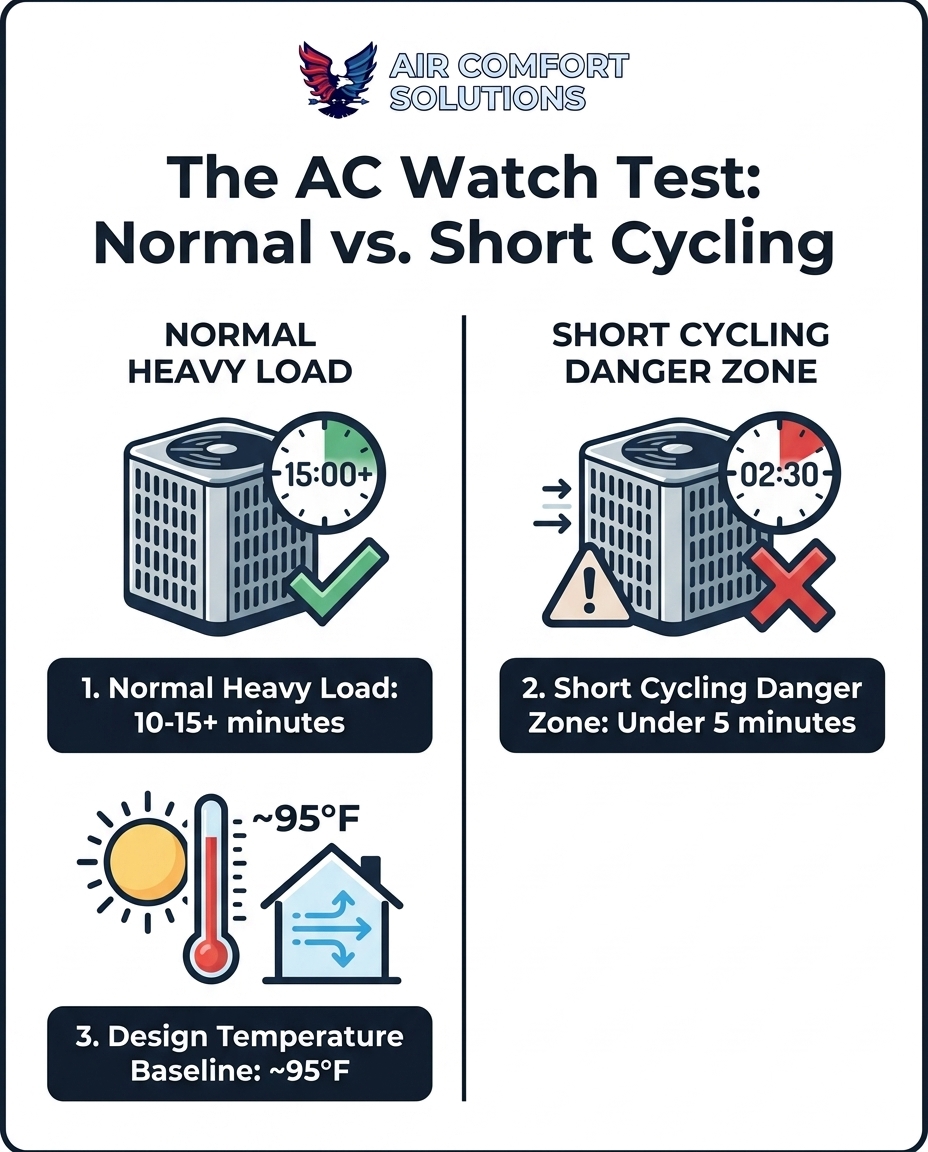
In standard residential applications, most air conditioning units are designed to achieve maximum efficiency when the outdoor temperature sits around 95 degrees. The system is perfectly calibrated to handle the thermal load of a typical summer day. If an installer were to size an air conditioner to easily handle a 105-degree day, that unit would be massively oversized for the other 95 percent of the cooling season. An oversized unit cools the house too quickly and fails to remove humidity, leaving your indoor air feeling cold and clammy.
The extreme heat factor: When the outdoor temperature in Pinehurst TX crosses into the triple digits, the thermal load on your home increases exponentially. The heat pressing against your roof, windows, and exterior walls transfers into your living space at a much faster rate. Because the outdoor temperature has exceeded the system's 95-degree design threshold, the air conditioner naturally has to work overtime to bridge the gap.
During these extreme weather events, the equipment is not failing; it is simply maxed out. It takes significantly more energy and time to remove heat from a house when the ambient air outside is boiling. Recognizing this foundational design limit helps normalize the longer, more frequent cycles you experience during the hottest weeks of the year.
When extreme heat blankets the region, establishing a baseline for a healthy system is vital. A system that is working hard against high temperatures and humidity will exhibit specific operational patterns that differ from milder weather behavior. Under a heavy thermal load, a normal cooling cycle typically lasts 10 to 15 minutes, though it can stretch even longer during the hottest part of the afternoon.
The critical role of humidity: Temperature is only half of the cooling equation. High moisture levels in the air require the air conditioner to run significantly longer simply to dehumidify the space before it can effectively lower the ambient temperature. When warm indoor air blows across the cold evaporator coil, the system must first extract the latent heat (humidity) through condensation. Only after the moisture is pulled out of the air does the sensible heat (temperature) begin to drop substantially.
• Extended run times: Running constantly or taking a long time to cool down is a normal physical response to extreme thermal loads.
• Consistent indoor temperatures: Even if the unit runs for 20 minutes at a time, if the thermostat holds steady at your set temperature, the system is performing correctly.
• Proper airflow: A healthy system will push a strong, steady stream of cold air from the supply vents throughout the entire cycle.
As long as the home is maintaining a reasonable temperature and the indoor humidity feels controlled, extended run times are not inherently dangerous to your equipment. Choosing the best AC systems for hot and humid climates often involves understanding how they handle these extended dehumidification cycles. A system that runs longer is actually doing a better job of filtering and dehumidifying your air.
While extended cycles are normal in extreme heat, short cycling is a definitive mechanical malfunction that requires immediate intervention. Short cycling occurs when the air conditioner's compressor turns on and off in rapid, truncated intervals before the home ever reaches the target temperature set on the thermostat.
The mechanical toll: You can think of your air conditioner's compressor like a car engine. The most stressful and energy-intensive part of operating a car is starting the engine and accelerating from a dead stop. Once you are cruising on the highway, the engine operates efficiently. Similarly, an air conditioner draws a massive surge of electricity (known as inrush current) just to start the compressor. When a system short cycles, it forces the compressor to endure this violent startup sequence over and over again. This relentless starting and stopping causes rapid wear and tear on the electrical components, overheats the compressor motor, and can lead to a premature, catastrophic system failure.
Beyond the mechanical damage, short cycling produces several uncomfortable secondary symptoms in your home. Because the cycles are cut short, the system never has enough time to extract moisture from the air, leaving indoor humidity uncomfortably high. You will likely notice that the home never quite reaches the target temperature, leaving hot and cold spots throughout different rooms.
• Cycle Duration — Normal Heavy-Load Operation: 10 to 15+ minutes — Genuine Short Cycling: Under 5 minutes
• Indoor Humidity — Normal Heavy-Load Operation: Comfortable and controlled — Genuine Short Cycling: Clammy, damp, and muggy
• Thermostat Goal — Normal Heavy-Load Operation: Eventually reaches or holds target temp — Genuine Short Cycling: Shuts off before reaching target temp
• Energy Bills — Normal Heavy-Load Operation: Slightly elevated due to weather — Genuine Short Cycling: Spiking severely due to constant restarts
Furthermore, short cycling will cause your energy bills to skyrocket. Because the start-up phase of a cooling cycle consumes the most electricity, a unit that starts ten times an hour will use vastly more power than a unit that starts twice an hour and runs for a longer duration.
If you suspect your system is struggling, you do not have to guess what is happening. You can perform a specific, measurable self-diagnosis using nothing more than a timepiece. As a homeowner, you deserve honest guidance. That is exactly why Air Comfort Solutions actively encourages homeowners to perform this simple watch test to rule out false alarms, saving you from paying for unnecessary diagnostic fees when the equipment is simply doing its job.
Here is exactly how to time your cooling cycles to determine if your system is healthy or in distress:
1. Position yourself correctly: Stand near a supply vent where you can clearly hear the system running and feel the airflow, or stand directly beneath your return air grille. Have a watch, clock, or smartphone timer ready.
2. Wait for the startup: Listen for the distinct sound of the outdoor compressor and indoor blower motor kicking on. The moment you hear the system engage and feel cold air blowing, start your timer.
3. Time the duration: Let the system run completely uninterrupted. Do not adjust the thermostat while the test is occurring.
4. Stop the timer: The exact moment you hear the system power down and the airflow stops, pause your timer and record the duration.
5. Evaluate the results: Compare your recorded time against the standard thresholds. 10-15 minute normal heavy-load cycles are generally healthy during extreme heat. If the system shuts off in under 5 minutes, you have identified a short-cycling problem.
6. Observe consistency: Never judge your system based on a single cycle. Observe two or three consecutive cycles to ensure the timing is consistent. Occasionally, a system might run a brief cycle if someone just opened an exterior door, but consecutive sub-5-minute cycles confirm a malfunction.
If your system fails the watch test and consistently shuts down in under five minutes, there is an underlying issue triggering the equipment's internal safety mechanisms. Modern air conditioners are equipped with sensors designed to shut the system down to prevent catastrophic damage when operating conditions fall out of a safe range. Understanding these common culprits can help you communicate effectively with your technician.
The most frequent cause of short cycling is a severe restriction in airflow. Your air conditioner requires a specific volume of air moving across the indoor evaporator coil to function. When that airflow is choked off, the coil drops in temperature too rapidly and can literally freeze solid. Once the system detects this freezing condition, the internal safety switches trip, shutting the compressor off immediately.
By the time late August arrives, your air filters have often accumulated months of dust, pet dander, and debris from running continuously throughout the summer. This heavy accumulation severely restricts airflow, making clogged filters a highly likely culprit during the peak season. Blocked return vents, closed supply registers in unused rooms, or crushed ductwork can also create the exact same pressure imbalances. While changing a dirty filter is a simple task you can handle yourself, persistent airflow issues require a deeper look.
Another major cause of short cycling is an improperly sized system. If an oversized AC unit was installed in your home, it will blast the space with cold air, dropping the temperature rapidly and satisfying the thermostat in just a few minutes. However, because the cycle is so brief, the humidity remains untouched, leading to rapid on/off cycles as the thermostat detects the lingering humid, warm air shortly after shutting down.
Low refrigerant levels are equally dangerous. Refrigerant is the lifeblood of your cooling system, responsible for absorbing heat from inside your home and releasing it outside. If your system has a leak and the refrigerant charge drops, the pressure inside the copper lines changes drastically. This triggers a low-pressure safety switch that immediately shuts the compressor down to prevent it from burning out. Because handling refrigerant requires specialized licensing, specialized gauges, and strict environmental compliance, this is never a situation you should attempt to diagnose or repair yourself. Ignoring rapid cycling caused by these mechanical faults will inevitably lead to a dead compressor.
When the mid-summer heat is bearing down on your home, making the right decision about your cooling system comes down to observing the facts rather than giving in to panic. By utilizing the watch test, you have the data you need to make an informed choice.
The decision matrix is straightforward: If your system passes the watch test by running for 10 to 15 minutes or more, and the house remains relatively cool and comfortable, let the system work. It is battling extreme thermal loads and doing exactly what it was engineered to do. End-of-season stress on an AC unit is completely normal when the outdoor temperatures climb past the design threshold.
Conversely, if your system is genuinely short cycling—shutting down in under 5 minutes repeatedly—you must take immediate action. The very first step is to turn the system off entirely at the thermostat. Allowing a short-cycling unit to continue running will cause immense strain on the compressor, potentially turning a minor electrical repair into a total system replacement.
Once the system is safely powered down, it is time to call for backup. Relying on experienced Pinehurst AC professionals ensures that any mechanical failures, refrigerant leaks, or electrical faults are addressed promptly and correctly. Ignoring true warning signs is a costly mistake, but knowing when to ask for help protects your investment.
Understanding how your air conditioner operates brings incredible peace of mind, especially when extreme weather pushes your equipment to the brink. Knowing the difference between a system that is working hard and a system that is crying out for help allows you to stay calm and comfortable all summer long.
If your watch test reveals a genuine short-cycling issue, or if you simply want the reassurance of a professional evaluation, do not hesitate to reach out. We believe in providing honest, transparent guidance to keep your home safe and cool without the high-pressure sales tactics. Schedule your air conditioning diagnostics and repair today, and let our experts restore your system's performance and your peace of mind.


Zane came out and did an amazing job! Super friendly, honest and transparent about the work that needed to be done. This is my second time working with Air Comfort Solutions and they’re my go to for HVAC services. Highly recommend.
God's AMAZING grace sent us Robert and Zane. We have been without air in this Texas heat for six weeks and four days. We've had a few contractors give us quotes all trying to upsell when we're at a low point. But not the guys at Air Comfort Solutions. They came in assessed our situation, gave us honest feedback, and showed us the issues as they proceeded with the assessment for clear understanding. We highly recommend them for their professionalism, quality products, and fair pricing. We hands down support them for all the work they do 💯 %.
Robert and Zane gone above and beyond to make the process easy and affordable.
Would definitely recommend!!
I’m writing this review to let everyone know that Air Comfort Solutions is the company to work with. I know the owner ( Robert) for several years now. He has been taking care of my residential and business work orders. Robert is professional, knowledgeable and will save you money. I just want to thank Robert for great job you have been doing for me.