The Value of Sealing Your Return Air Plenum Before the Holidays
Most homeowners buy expensive filters to fix dusty air, not realizing a leaky return plenum in the attic is the real culprit. See why sealing it now saves your holiday gatherings.

Is your thermostat actually broken, or is it trying to tell you something else entirely? Figuring out exactly why your thermostat screen goes blank during the hottest part of the day usually starts with a moment of pure panic. You check the wall because the house feels unusually warm, only to find a completely dark screen. Your immediate thought is likely a catastrophic electrical failure or a dead control panel that will take days to replace.
Here is the reality: in many cases, that blank screen is actually a deliberate safety mechanism doing exactly what it was designed to do. Before you assume the worst about your electrical system, you need to look at your air conditioning system's plumbing. Recognizing this issue as a water safety trigger rather than an electrical meltdown is the crucial first step to getting your home cool again.
In our years of serving Pinehurst TX area homes, our team at Air Comfort Solutions has found this sudden shutoff to be incredibly common, especially as back-to-school season hits and systems are exhausted from months of intense seasonal workloads. When your system faces these late-summer demands, the condensate drain system interacts directly with your thermostat's power supply. If you are looking for professional air conditioning services to resolve this safely, understanding why your system pulled the plug on itself will help you make the right call.
To understand why your thermostat lost power, you first have to understand how your air conditioner handles moisture. An air conditioner does not just cool the air; it also acts as a massive dehumidifier. As local HVAC experts, we know firsthand that Southeast Texas late-summer heat brings extreme humidity, making massive condensation production a daily reality for the systems we service.
When warm, humid air gets pulled through your return vents, it passes over the freezing cold evaporator coil inside your indoor unit. As the air cools, it can no longer hold as much moisture. That moisture condenses into liquid water right on the coil, much like water droplets forming on the outside of a cold glass of iced tea.
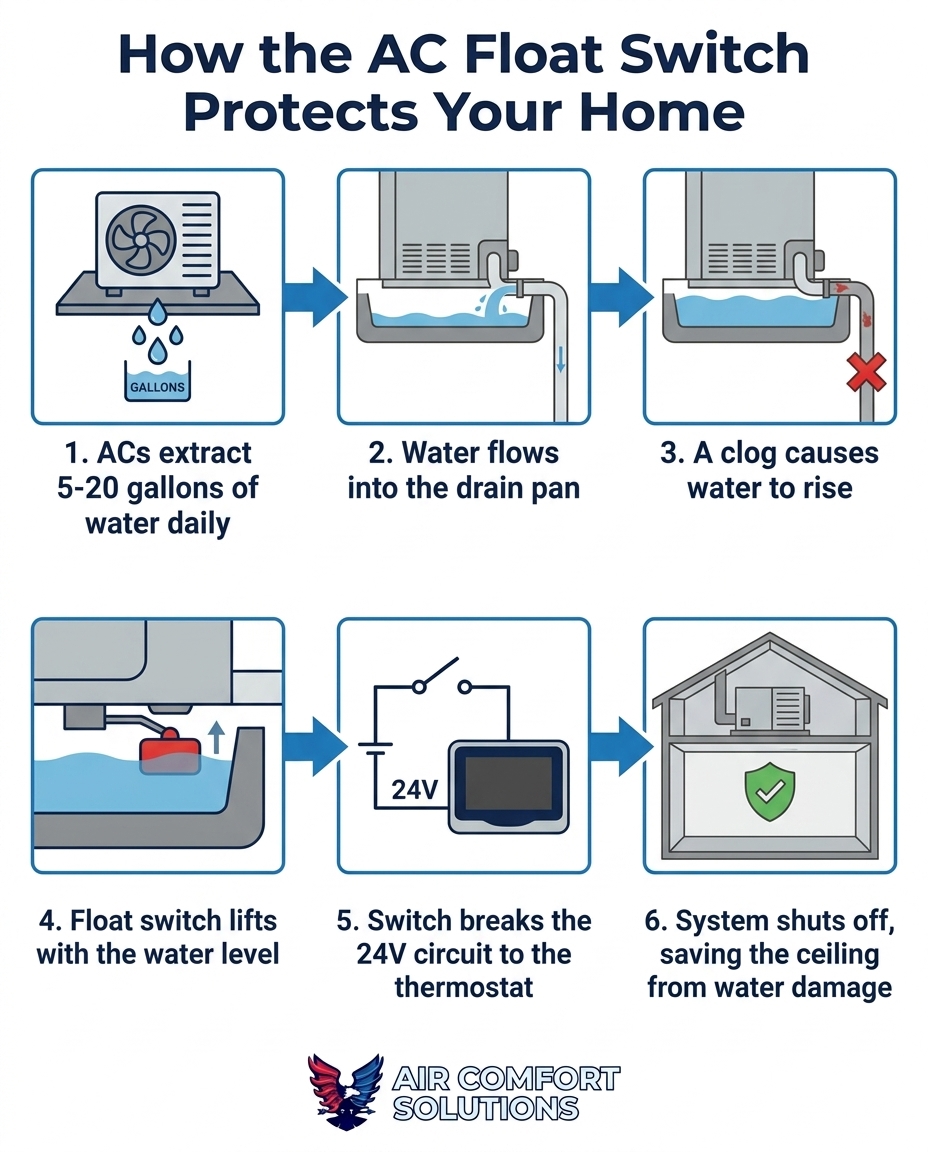
According to Department of Energy data, a standard central air conditioning system can extract anywhere from 5 to 20 gallons of water per day from your indoor air. During periods of August late-summer humidity, your system is running almost continuously. This nonstop operation means the moisture extraction process never gets a break.
• Mild Spring Days — System Runtime: Short, intermittent cycles — Condensation Output: Low to moderate (easy drainage)
• Peak August Afternoons — System Runtime: Continuous, long cycles — Condensation Output: Maximum (gallons per day)
• High Indoor Humidity — System Runtime: Extended cycles to remove moisture — Condensation Output: Heavy, rapid buildup in the pan
All of this extracted water has to go somewhere. It drips off the evaporator coil, falls into a primary drain pan located under the unit, and flows out of your house through a white PVC pipe known as the condensate drain line. When everything works perfectly, you never notice this massive volume of water leaving your home.
When that daily 20 gallons of water cannot escape through the drain line, the water level inside the drain pan begins to rise rapidly. This is where your ceiling's built-in defense system steps in: the safety float switch.
The safety float switch is a small mechanical and electrical device mounted directly on the edge of your AC drain pan or plugged into the secondary drain port. It features a tiny buoyant float—often made of plastic or cork—that rests at the bottom of a small cylinder. As the water level in the pan rises to a dangerous height, the float physically lifts up.
How it cuts the power:
• The 24-volt circuit: Your thermostat does not run on standard wall power. It receives a low-voltage (24V) continuous electrical current directly from the air handler in your attic or closet.
• The interruption: The safety float switch is wired directly into this 24V power line.
• The trigger: When the float lifts, it trips an internal magnetic switch that instantly breaks the electrical circuit.
• The result: The power to your thermostat is completely cut off, causing the screen to go completely blank.
While a dead thermostat is frustrating, it is actually a highly successful defense mechanism. If the system continued to run, the pan would overflow, sending gallons of water crashing through your drywall, ruining ceilings, floors, and insulation. The blank screen is your system sacrificing your immediate comfort to prevent catastrophic water damage. If you are already wondering what strange AC noises mean, a sudden silence paired with a blank screen is a clear indicator of a tripped switch.
If the float switch tripped, it means the drain pan filled up. But why did the drain line stop moving water in the first place? Condensate lines rarely clog overnight. In our experience responding to late-summer service calls across Pinehurst, we see these lines slowly choke off over months of continuous use due to a few common culprits.
1. Algae and Biological Growth: The inside of your condensate drain line is dark, constantly damp, and warm. This creates the perfect breeding ground for algae, mold, and mildew. Over time, these biological growths form a thick, jelly-like substance that clings to the walls of the PVC pipe, eventually blocking water flow entirely.
2. Sludge and Airborne Dust: No air filter catches 100% of airborne particles. Microscopic dust, pet dander, and dirt bypass the filter, settle on the wet evaporator coil, and wash down into the drain pan. When this dirt mixes with water and biological growth, it forms a dense, heavy sludge that settles in the lowest parts of the drain line.
3. Continuous Peak Usage: During intense late-summer heat, the sheer volume of water moving through the system accelerates how fast this sludge accumulates. The system never dries out, allowing growth to thrive unchecked.
4. Lack of Preventative Maintenance: Drain lines require seasonal flushing. Without routine clearing, the natural buildup of household dust and biological matter will inevitably lead to a total blockage. Improving your overall indoor air quality and humidity control can help reduce the amount of particulate matter entering the system, but the line still needs regular physical cleaning.
When homeowners realize the problem is just a clogged pipe, the temptation to fix it themselves is strong. However, our technicians always warn that attempting to clear an AC drain line without professional tools and training frequently leads to severe equipment damage.
The risks of high-pressure air: Many online guides suggest using an air compressor to blow out the clog. Standard PVC drain lines are not glued together to withstand high pressure. Hitting the line with compressed air often blows the pipe joints apart inside your walls or attic. You might clear the clog, but you will create a hidden leak that destroys your home's framing over time.
The dangers of improper chemicals: Pouring harsh chemical drain cleaners down an AC line is incredibly dangerous. These chemicals can melt the PVC pipe, create toxic fumes that get circulated through your air vents, and cause irreversible damage if they splash backward onto the evaporator coil. The aluminum fins on the coil are paper-thin and highly reactive to harsh solvents.
Opening the cabinet: Accessing the primary drain pan often requires opening the air handler cabinet. This exposes you to high-voltage electrical components, sharp metal edges, and the fragile evaporator coil itself. One slip of a tool can puncture the coil, resulting in a total loss of refrigerant. This is strictly a job for a licensed professional. Having a preventative AC maintenance plan ensures these lines are safely cleared by experts before they ever have a chance to back up.
While you should never attempt to dismantle the plumbing or electrical components, there are a few safe, productive steps you can take to verify the issue while you wait for help. Our team at Air Comfort Solutions responds quickly to emergency AC shutoffs in the local area, safely clearing lines before the late-summer Texas heat takes over your home.
• Check the main electrical breaker: Look at your home's main electrical panel. If the breaker labeled "AC" or "HVAC" is tripped to the middle position, flip it fully off, then back on. If it trips again immediately, leave it off—you have a hard electrical short, not a plumbing issue.
• Look for visible water pooling: Safely inspect the area around your indoor air handler (usually in the attic, garage, or a utility closet). If you see water pooling around the base of the unit, or dripping from a secondary pipe above a window outside, your primary drain is definitely clogged.
• Inspect and change the air filter: A severely clogged air filter can cause the evaporator coil to freeze solid. When that ice melts all at once, it overwhelms the drain pan and trips the float switch. If your filter is caked in thick gray dust, replace it immediately so the system has proper airflow once restored.
• Leave the system off: Do not attempt to bypass the float switch to force the system to run. Bypassing the switch guarantees that the overflowing water will flood your home. Leave the thermostat alone and wait for professional AC repair in Pinehurst.
Your thermostat most likely went blank because a safety float switch in your AC drain pan tripped and cut the power. When the system detects that water is about to overflow and damage your home, it breaks the 24-volt electrical circuit connected to the thermostat. Dead batteries or a tripped circuit breaker can also cause a blank screen, but during peak summer heat, a tripped float switch is the most common culprit.
Yes, a clogged AC drain directly causes the thermostat to go blank if your system is equipped with a safety float switch. The clog forces water to back up into the drain pan. As the water rises, it lifts the float switch, which immediately shuts off low-voltage power to the thermostat to prevent the system from producing more water.
The AC float switch is typically located directly on the side of the primary drain pan beneath your indoor evaporator coil, or plugged into the secondary drain port on the PVC pipe. It usually looks like a small PVC cylinder or a plastic cap with two thin wires coming out of the top, wired directly into the air handler's electrical panel.
When an AC float switch trips, it instantly breaks the electrical connection between the air handler and the thermostat. This immediately shuts down the entire cooling system to stop the production of condensation. The system will remain completely unresponsive, and the thermostat screen will stay blank, until the water is drained and the switch resets.
Your AC drain pan is full of water because the condensate drain line that carries water outside is clogged with algae, dirt, or biological sludge. Because the air conditioner continuously extracts gallons of moisture from the indoor air during the cooling process, any blockage in the exit pipe causes that water to pool rapidly in the pan.
A professional HVAC technician can typically locate the clog, safely clear the condensate line, and reset the system in under an hour. They use specialized suction equipment, safe clearing solutions, and nitrogen bursts to remove the blockage without damaging the fragile PVC joints or the indoor air handler.
Seeing a blank screen on your wall when the afternoon sun is beating down is stressful, but it is important to remember that this safety feature just saved your home from extensive water damage. The float switch did its job perfectly. Now, the system just needs a professional touch to clear the blockage and get the cold air flowing again.
If you are wondering why your thermostat screen goes blank during the hottest part of the day, do not ignore the warning signs or try to force the system to run. Call our licensed professionals at Air Comfort Solutions to safely flush the condensate line, inspect the drain pan, and restore your comfort with confidence.


Zane came out and did an amazing job! Super friendly, honest and transparent about the work that needed to be done. This is my second time working with Air Comfort Solutions and they’re my go to for HVAC services. Highly recommend.
God's AMAZING grace sent us Robert and Zane. We have been without air in this Texas heat for six weeks and four days. We've had a few contractors give us quotes all trying to upsell when we're at a low point. But not the guys at Air Comfort Solutions. They came in assessed our situation, gave us honest feedback, and showed us the issues as they proceeded with the assessment for clear understanding. We highly recommend them for their professionalism, quality products, and fair pricing. We hands down support them for all the work they do 💯 %.
Robert and Zane gone above and beyond to make the process easy and affordable.
Would definitely recommend!!
I’m writing this review to let everyone know that Air Comfort Solutions is the company to work with. I know the owner ( Robert) for several years now. He has been taking care of my residential and business work orders. Robert is professional, knowledgeable and will save you money. I just want to thank Robert for great job you have been doing for me.