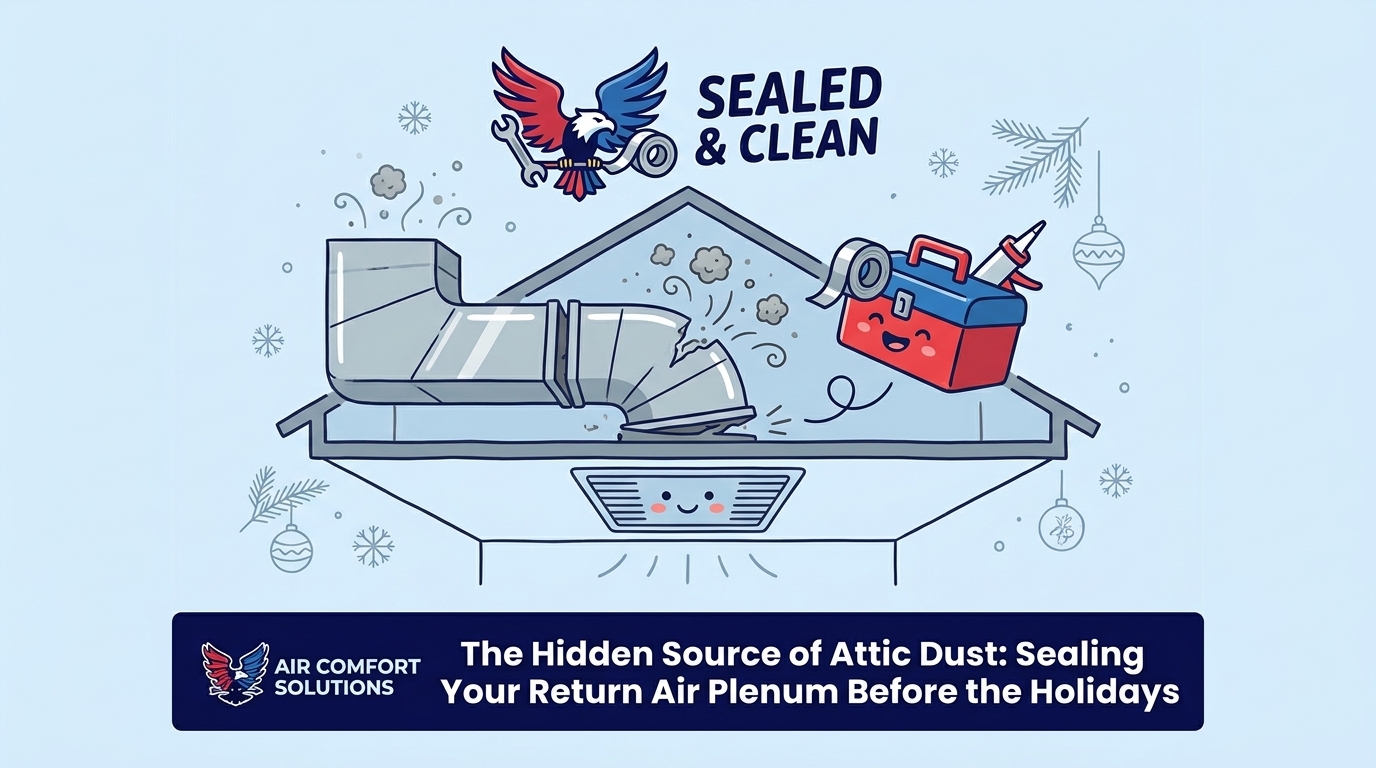
The Value of Sealing Your Return Air Plenum Before the Holidays
Most homeowners buy expensive filters to fix dusty air, not realizing a leaky return plenum in the attic is the real culprit. See why sealing it now saves your holiday gatherings.
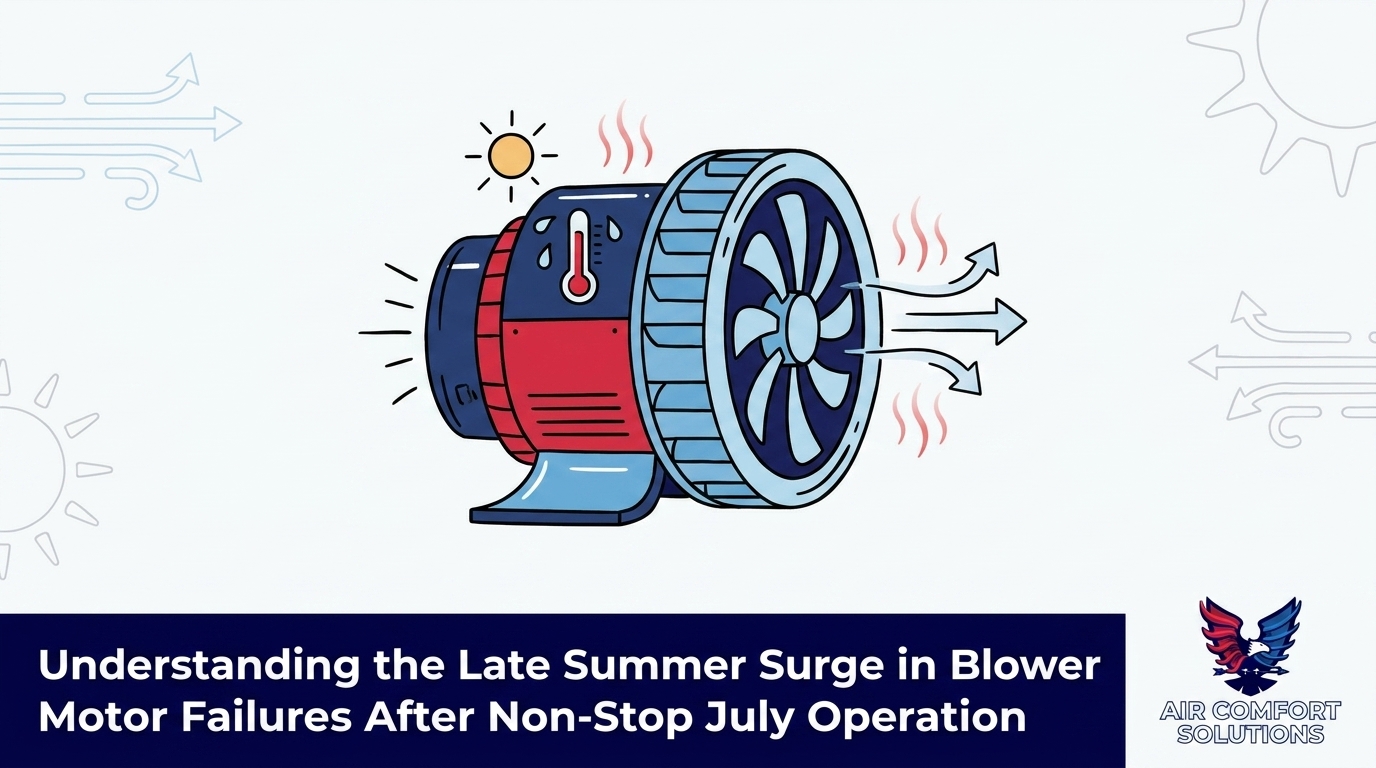
As the intense heat of the August late-summer cooling season settles in, understanding the late summer surge in blower motor failures after non-stop July operation is critical for homeowners who want to avoid a sudden loss of cooling. Throughout the peak of summer, residential cooling systems are pushed to their absolute mechanical limits. While modern air conditioners are built to withstand heavy usage, the relentless, non-stop workload placed on these systems during July creates a compounding effect of wear and tear. The indoor blower motor—the unsung hero responsible for pushing cold air through every duct and vent in the house—often takes the brunt of this continuous operation.
By the time August and the back-to-school transition arrive, the mechanical strain has reached a critical threshold. At Air Comfort Solutions, our team typically sees a sharp spike in emergency calls during this late-summer stretch simply because systems have been running without a break. For those looking to secure reliable air conditioning services, a proactive approach is always better than an emergency response. Enrolling in an AC maintenance plan can help mitigate these risks, but understanding the root cause of the strain is the first step. August breakdowns are rarely sudden events; rather, they are the direct result of cumulative seasonal stress that has been building up for weeks. Recognizing the early signs of this stress can empower you to prevent a total system failure when you need your air conditioner the most.
The blower motor operates in a challenging environment even under normal conditions. It sits inside the air handler, constantly spinning to maintain a specific volume of airflow. When the system runs without pausing for days or weeks on end, the motor never gets a chance to cool down. This continuous operation slowly degrades the internal components, setting the stage for a mechanical failure just as the late summer heat reaches its peak.
To truly understand why blower motors fail during the August late-summer cooling season, you have to look at the mechanical reality of continuous operation. HVAC systems are engineered for cyclical operation. A standard cooling cycle involves the system turning on, running until the thermostat's set temperature is reached, and then shutting off. These built-in rest periods are not just for energy efficiency; they are mechanically necessary for the equipment to dissipate internal heat.
In our years of restoring comfort to Pinehurst homes, we've seen firsthand how our Southeast Texas climate—where temperatures frequently stay above 90 degrees with high humidity throughout July—pushes equipment to the brink. This extreme climate forces residential systems to run almost non-stop just to maintain a baseline level of indoor comfort. This continuous operation drastically increases the motor's thermal workload, eliminating the off-cycle cooling periods and trapping heat inside the blower motor housing.
Electric motors function by drawing continuous electrical current, which naturally generates ambient heat as a byproduct of electrical resistance. Under a normal cyclical load, this heat is manageable. However, without pauses, the internal temperature of the motor steadily climbs. Prolonged heat exposure begins to weaken the electrical insulation wrapped around the internal motor windings. Once this protective insulation degrades, the electrical current can short out, leading to an immediate and catastrophic motor failure. The longer the motor runs without a break, the higher the internal core temperature rises, accelerating the degradation of these sensitive electrical components.
Standard cooling cycles allow the heavy metal casing of the motor to act as a heat sink, dissipating accumulated heat into the surrounding air when the system cycles off. Relentless late summer heatwaves completely eliminate these recovery times. The factory lubrication sealed inside the motor's bearings begins to break down and evaporate under this continuous high-temperature exposure. The compounding effect of electrical heat and increased mechanical friction leads directly to late summer mechanical fatigue. Without a chance to cool, the motor is essentially cooking itself from the inside out over a 30-day continuous run cycle.
While continuous operation generates internal heat, external factors often accelerate the timeline toward failure. One of the most significant hidden enemies of a healthy blower motor is high static pressure. Static pressure refers to the resistance to airflow within the ductwork and the air handler. The blower motor is designed to push a specific volume of air against a specific amount of resistance. When that resistance increases, the motor has to work significantly harder to move the same amount of air.
A pattern we see often during the heavy usage periods of July is that the HVAC system pulls significantly more air—and consequently, more dust, pet dander, and airborne debris—through the return ducts. This causes air filters to reach their maximum capacity in a matter of weeks rather than months. If you are experiencing weak register airflow and unusual motor humming, our technicians frequently find that a severely clogged filter is the primary culprit driving up the static pressure.
For homeowners seeking comprehensive HVAC support, understanding how this physical resistance impacts the motor is essential. The blower motor is a relatively simple device; it will continue trying to pull air even when restricted. This increased physical resistance directly links to a higher electrical amperage draw, which subsequently causes severe overheating.
When an air filter becomes completely saturated with debris, it acts like a solid wall rather than a breathable membrane. The physical restriction creates a powerful vacuum effect in the return plenum. In extreme cases, the suction is so strong that the clogged filter will actually bow inward toward the blower motor. The motor must overcome this intense vacuum to pull air into the system, straining its mechanical components to their limits. This forces the motor to operate outside of its designed electrical parameters, generating excessive heat that quickly degrades the bearings and windings.
A common misconception we hear from homeowners is that an air conditioner breaking down in the middle of the August late-summer cooling season is simply a stroke of sudden bad luck. In reality, mechanical failures in HVAC systems are highly predictable outcomes of cumulative stress. By shifting your perspective from viewing breakdowns as random events to understanding them as a timeline of wear and tear, you can better protect your equipment.
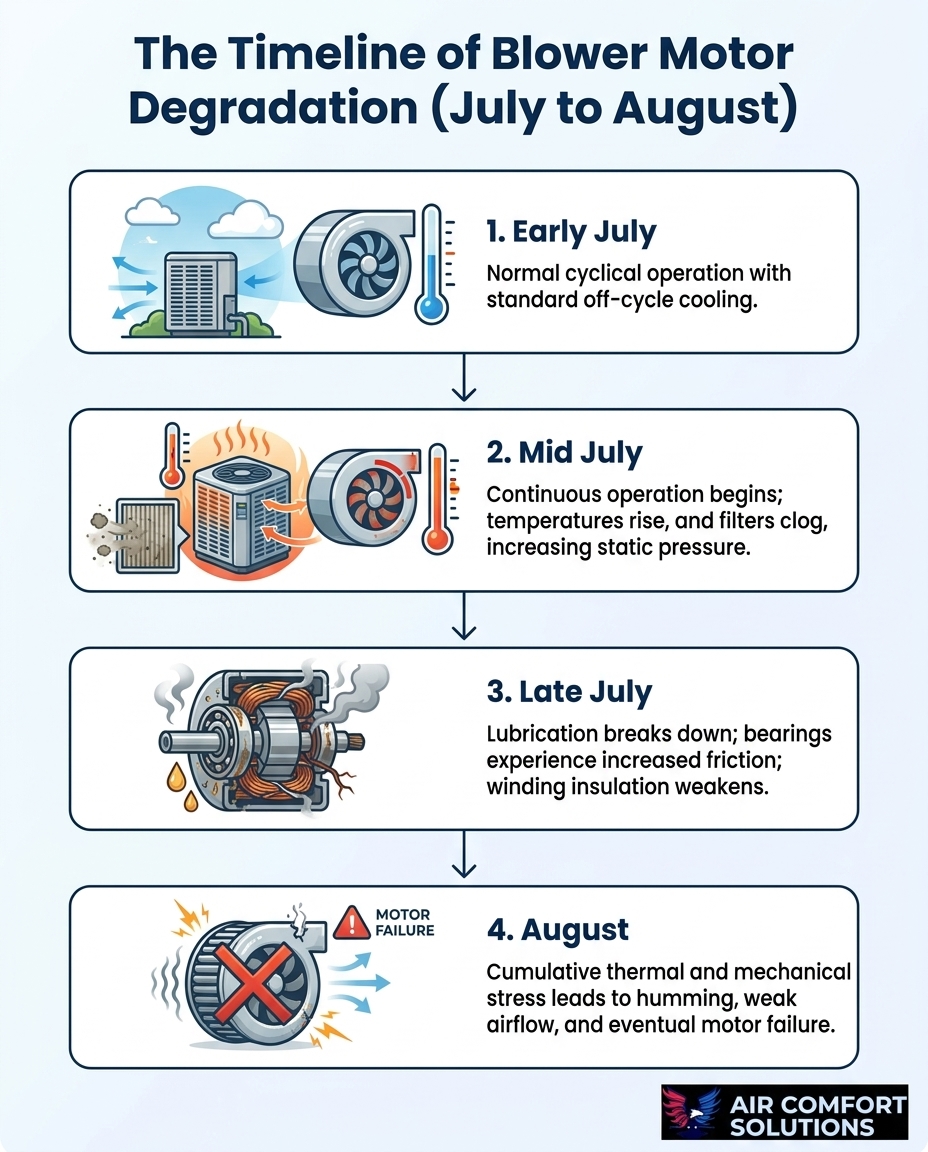
The timeline typically traces from early July, where the system operates with standard efficiency, into late July, where continuous strain begins to take a hidden toll. As the weeks progress, the lack of downtime compounds the mechanical stress, culminating in an August failure. The blower motor does not just suddenly decide to stop working; it fights through weeks of increasing friction and electrical resistance before finally giving out.
• Early July — System Status: Standard cyclical operation — Internal Component Impact: Normal thermal dissipation; bearings fully lubricated.
• Mid July — System Status: Continuous operation begins — Internal Component Impact: Filters clog rapidly; static pressure increases; motor runs hot.
• Late July — System Status: Maximum workload sustained — Internal Component Impact: Lubrication dries out; winding insulation begins to weaken.
• August — System Status: Cumulative mechanical fatigue — Internal Component Impact: Bearings seize or electrical windings short out completely.
It is also important to note that the blower motor does not suffer alone. Other critical components, such as the run capacitor, also suffer under this cumulative thermal load. The capacitor provides the initial jolt of electricity needed to start the motor and helps maintain a steady current while it runs. When the motor struggles against high static pressure, it places an immense electrical demand on the capacitor. This is why capacitor failures in extreme heat are so common, and a failing capacitor can further exacerbate motor strain by supplying inconsistent voltage.
As the timeline progresses into August, the physical consequences of heat become apparent. Friction increases exponentially as the factory lubrication dries out from constant, unyielding heat. Worn bearings cause the motor shaft to wobble slightly or, in severe cases, seize up entirely. This physical resistance demands more electricity to keep the fan spinning, which generates even more heat, creating a destructive cycle that accelerates burnout.
The key to avoiding a total system failure is early detection. Because the degradation happens over a period of weeks, the blower motor will typically exhibit several warning signs before it completely fails. Empowering yourself to identify the specific symptoms of impending blower motor failure can save you from a miserable, hot weekend waiting for an emergency repair.
If you notice weak register airflow and unusual motor humming, the degradation process is already well underway. In our experience, acting immediately on these signs, rather than waiting for the air conditioner to stop cooling entirely, is the most effective way to protect the system from collateral damage.
• Auditory Clues (Humming): A loud, persistent humming noise from the indoor unit often indicates an electrical issue, a failing capacitor, or a motor that is receiving power but is physically stuck due to seized bearings.
• Auditory Clues (Grinding): Grinding, screeching, or metal-on-metal sounds point directly to failing bearings. Intermittent noises during startup are often the earliest warning signs of friction.
• Airflow Changes: A noticeable drop in air volume coming from the vents is a major red flag. The system may run continuously, but it fails to push enough air to lower the indoor temperature.
• Hot Spots in the Home: Because the motor cannot push air efficiently, rooms located furthest from the indoor air handler will begin to develop noticeable hot spots.
• Unusual Odors: The smell of overheating electrical components, often described as an ozone smell or burning plastic, means the insulation on the motor windings is actively melting. Turn the system off immediately if you smell this.
When a blower motor begins to exhibit signs of severe stress during the August late-summer cooling season, diagnosing and repairing the issue requires a licensed professional. Replacing or repairing a blower motor is not a DIY project. It involves navigating high-voltage electrical connections, interacting with potentially dangerous capacitors, and executing precise mechanical calibration to ensure the new component operates safely.
As local HVAC experts, our team at Air Comfort Solutions understands firsthand the exact toll Southeast Texas summers take on equipment. Providing fast, reliable diagnostics specifically tailored to these heat-induced mechanical failures is a core part of our comprehensive Pinehurst HVAC services. We strongly advise against attempting to handle capacitors or electrical wiring without proper training, as it can result in severe injury or further damage to the system's control board.
A professional assessment goes beyond simply swapping out a part. A certified technician evaluates the entire system for collateral heat damage. If a motor has been overheating for weeks, nearby wiring harnesses, relays, and the control board may have also suffered thermal damage. A comprehensive diagnostic ensures that the root cause of the failure—whether it was high static pressure, a bad capacitor, or simple age—is addressed so the replacement motor does not suffer the exact same fate.
Professionals use specialized digital multimeters to measure the exact amperage draw of the motor while it is under load. Accurate diagnostics prevent the costly mistake of replacing an entire motor when the issue might actually be a smaller electrical component, like a failed run capacitor or a faulty relay. Furthermore, if a new motor is installed, load testing ensures it is properly calibrated to the system's static pressure, verifying that the airflow is balanced and the electrical draw is within safe factory specifications.
An AC blower motor overheats in late summer primarily due to the loss of off-cycle cooling periods. When temperatures remain consistently high, the system runs continuously, trapping internal heat and preventing the motor from dissipating thermal energy. This continuous operation breaks down lubrication and weakens electrical insulation, leading to severe overheating.
The most common early signs include unusual noises and diminished performance. You may notice weak register airflow, hot spots in certain rooms, or hear a loud humming, grinding, or screeching sound coming from the indoor air handler. Catching these auditory and physical clues early can prevent a complete system breakdown.
A humming motor with weak airflow usually indicates that electrical current is reaching the motor, but mechanical resistance is preventing it from spinning at full speed. This is often caused by seized bearings due to dried-out lubrication or a failing run capacitor that cannot provide enough startup torque. It requires immediate professional attention to prevent the motor from burning out entirely.
Yes, a severely dirty filter is one of the leading causes of premature blower motor failure. A clogged filter drastically increases static pressure within the system, forcing the motor to work harder to pull air through the restriction. This increased workload causes the motor to draw higher amperage, generating excessive heat that degrades internal components.
In hot climates with heavy usage, a blower motor typically lasts between 10 and 15 years, provided the system receives regular maintenance. However, neglected systems that operate with high static pressure or dirty components can experience motor failure much earlier, sometimes in under a decade, due to cumulative thermal stress.
A failing blower motor often produces grinding noises, runs excessively hot, or has seized bearings that physically prevent it from turning. A bad capacitor, on the other hand, is an electrical component that fails to deliver the necessary voltage to start the motor, often resulting in a distinct humming sound while the fan blades remain completely still. A licensed technician uses a multimeter to test the microfarad reading of the capacitor to determine which component has failed.
Late summer mechanical failures are rarely a surprise to the equipment; they are the predictable result of cumulative July heat stress. The relentless demand placed on your HVAC system eventually takes its toll on the blower motor, breaking down lubrication and stressing electrical windings. By understanding the timeline of thermal degradation and the impact of high static pressure, you can take a more proactive approach to your home's comfort.
If you are noticing weak register airflow and unusual motor humming during the August late-summer cooling season, do not wait for the system to stop working entirely. Acting on these early warning signs and seeking professional diagnostics from Air Comfort Solutions is the smartest way to ensure your system survives the rest of the season. A logical, expert breakdown of the issue by our licensed HVAC professionals will provide the clear guidance needed to safely resolve the mechanical strain, restoring your peace of mind and keeping your home perfectly comfortable.


Zane came out and did an amazing job! Super friendly, honest and transparent about the work that needed to be done. This is my second time working with Air Comfort Solutions and they’re my go to for HVAC services. Highly recommend.
God's AMAZING grace sent us Robert and Zane. We have been without air in this Texas heat for six weeks and four days. We've had a few contractors give us quotes all trying to upsell when we're at a low point. But not the guys at Air Comfort Solutions. They came in assessed our situation, gave us honest feedback, and showed us the issues as they proceeded with the assessment for clear understanding. We highly recommend them for their professionalism, quality products, and fair pricing. We hands down support them for all the work they do 💯 %.
Robert and Zane gone above and beyond to make the process easy and affordable.
Would definitely recommend!!
I’m writing this review to let everyone know that Air Comfort Solutions is the company to work with. I know the owner ( Robert) for several years now. He has been taking care of my residential and business work orders. Robert is professional, knowledgeable and will save you money. I just want to thank Robert for great job you have been doing for me.