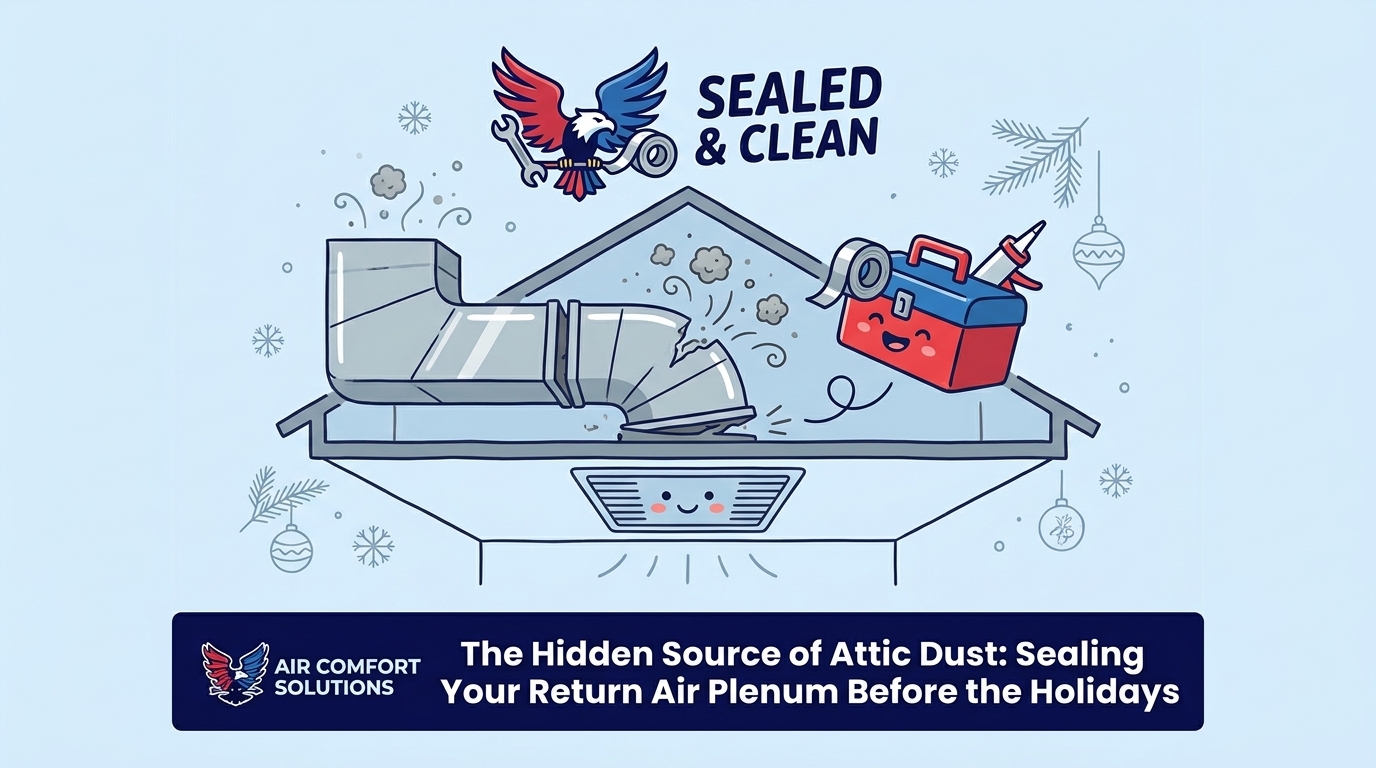
The Value of Sealing Your Return Air Plenum Before the Holidays
Most homeowners buy expensive filters to fix dusty air, not realizing a leaky return plenum in the attic is the real culprit. See why sealing it now saves your holiday gatherings.
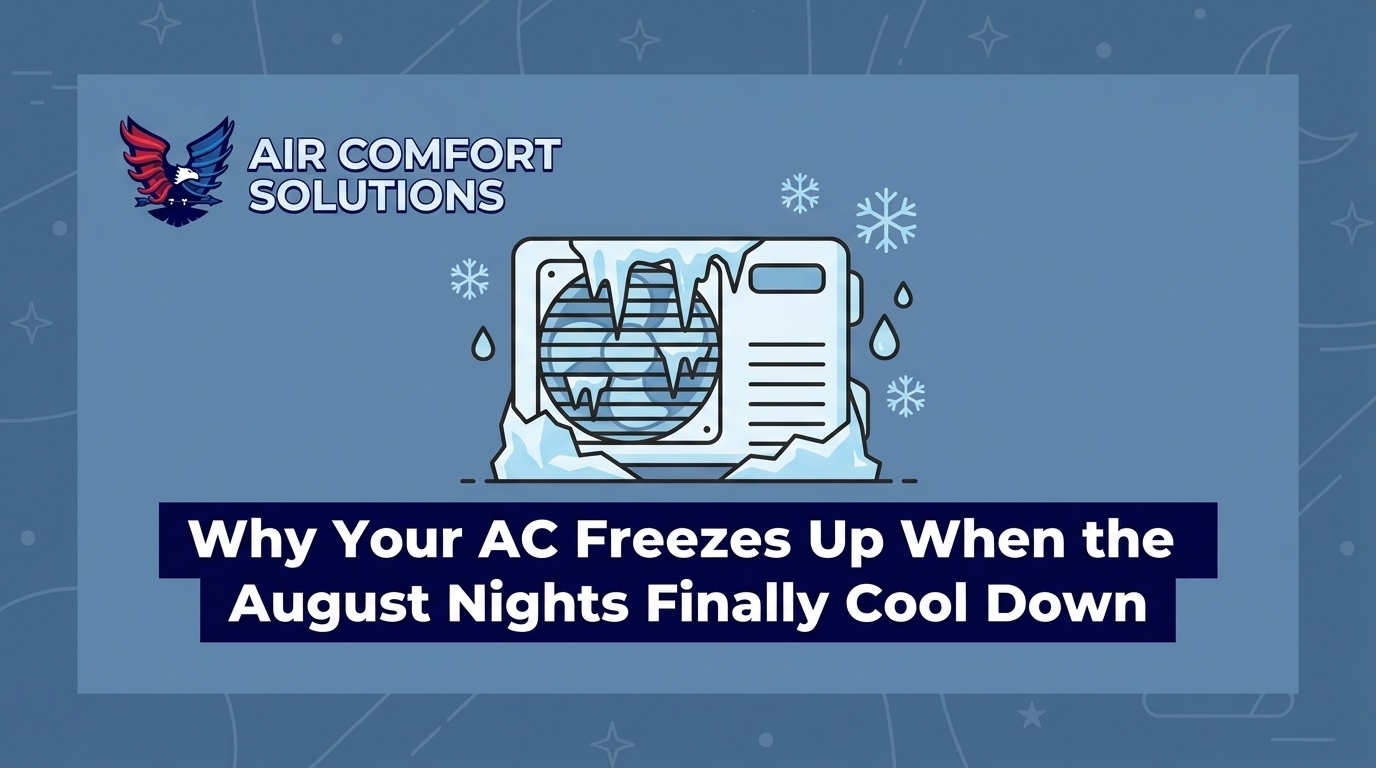
Why would your cooling equipment suddenly fail on the exact same evening the weather finally decides to give you a break? If you are wondering exactly why your AC freezes up when the August nights finally cool down, you are certainly not alone in this frustrating experience. In fact, our technicians at Air Comfort Solutions field dozens of emergency calls about this exact issue every late summer. It is one of the most common, yet deeply confusing, scenarios a homeowner can face. You go to bed enjoying the slight dip in outdoor temperatures, only to wake up sweating in a warm house. When you go outside to check the unit, or look at the indoor air handler, you find the copper lines and evaporator coil encased in a solid block of ice.
This paradox of late-summer cooling catches many off guard. Logic suggests that an HVAC system would struggle and freeze during the blistering heat of mid-July, not during the late August cooler nights. However, as we often explain to our customers, residential cooling systems are actually far more vulnerable to freezing when outdoor temperatures dip slightly while the system is already under strain. Understanding the physics of your cooling equipment is the first step to safely resolving the issue. By learning how ambient heat load interacts with indoor airflow, you can determine if this is a simple airflow restriction you can fix yourself, or a complex refrigerant issue requiring our professional technicians.
To understand why ice forms on your air conditioner, we first have to look at how the system actually cools your home. An air conditioner does not generate cold air; rather, it removes heat from the indoor air by absorbing it into the evaporator coil. The refrigerant pumping through that indoor coil is extremely cold. As warm, unconditioned air from your house blows across the metal fins of the coil, the refrigerant absorbs the heat and carries it outside.
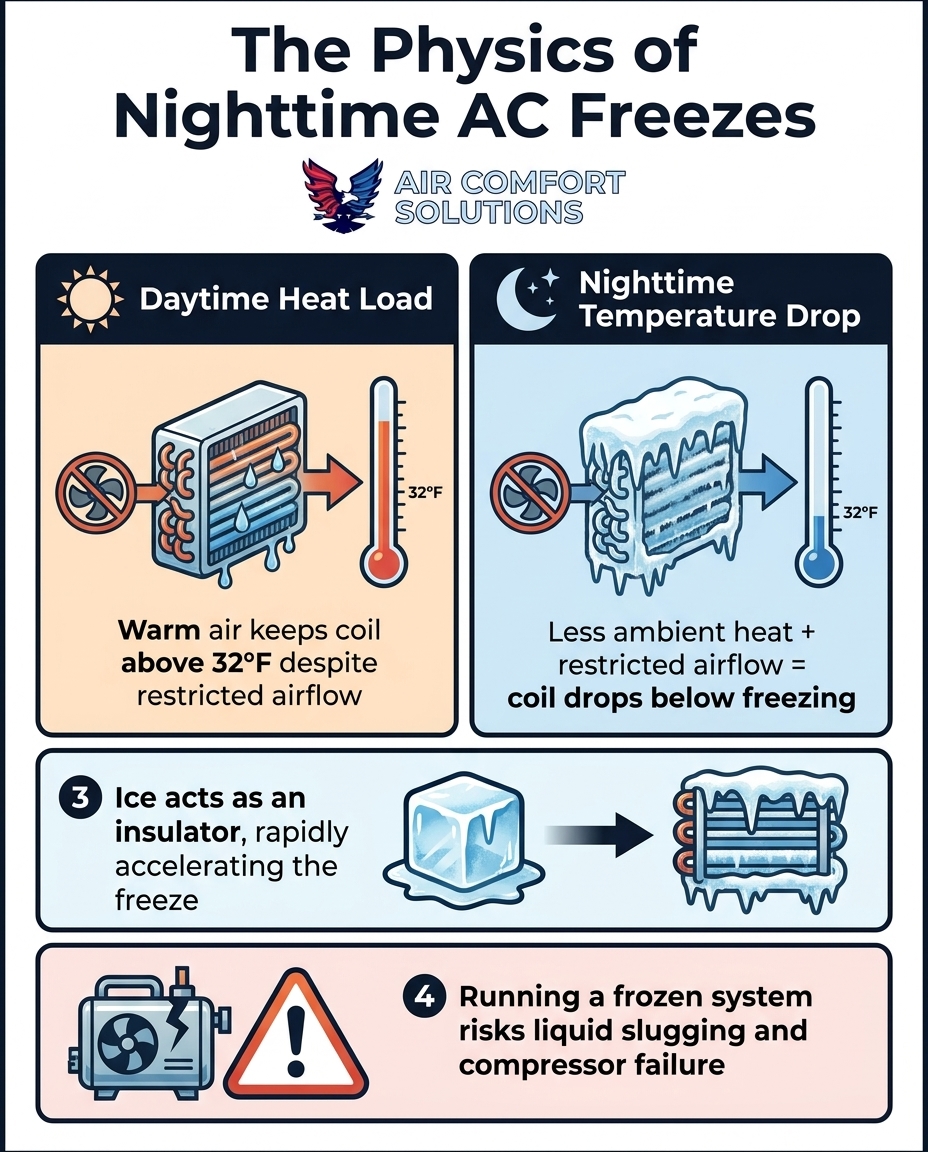
During the day, the intense heat load inside your house acts as a protective buffer. Because there is so much warm air constantly blowing over the coil, the refrigerant inside the copper lines stays well above the freezing point, even if your airflow is slightly restricted by a dusty filter. The margin for error is wide because the sheer volume of ambient heat prevents the metal from getting too cold.
However, that margin of error completely disappears when the sun goes down. When ambient outdoor temperatures drop at night, there is significantly less heat available inside your home for the system to absorb. If your airflow is restricted, the temperature of the evaporator coil will plummet rapidly. Once the metal drops below 32 degrees Fahrenheit, the ambient humidity in the air condenses on the cold metal and immediately freezes. Because ice acts as a highly effective insulator, it blocks any further heat transfer. This causes the freezing process to accelerate rapidly, eventually turning the entire coil into a solid block of ice.
The difference in system stress between a 95-degree afternoon and a 75-degree evening is profound. During a hot afternoon in Pinehurst TX, our team notices that the intense daytime heat often masks underlying airflow problems. Your system might seem to run perfectly all day because the heavy heat load forces the coil temperature to stay elevated. When evening arrives and the temperature finally drops, the system loses that artificial heat buffer, exposing the airflow restriction and causing the unit to fail overnight.
When our technicians look at the timeline of late-summer wear and tear, the reasons behind restricted airflow become very clear. By the time the back-to-school transition arrives and late August cooler nights set in, most residential cooling systems have been running almost non-stop since May. Over those four months, the blower motor has pushed enormous volumes of household dust, pet dander, pollen, and airborne debris through your ductwork.
Standard 90-day pleated filters are often severely compromised by the end of summer. A filter that looked perfectly fine in June is likely acting as a solid wall by late August, choking off the warm air the evaporator coil desperately needs to prevent freezing. If you want to avoid this late-season breakdown, learning how and when to change your AC filter in humid Texas heat is one of the most effective maintenance habits you can develop.
Common Airflow Restrictors Include:
• Clogged Air Filters: The number one cause of frozen coils we see in the field, completely starving the system of warm return air.
• Closed Supply Vents: Shutting vents in unused guest rooms or storage areas increases static pressure and reduces the overall volume of air moving over the coil.
• Blocked Return Grilles: Furniture, rugs, or curtains placed in front of return vents prevent the system from breathing in enough air.
• Failing Blower Motors: A motor weakened by months of continuous summer operation may spin too slowly to move an adequate volume of air.
When you combine any of these airflow restrictions with lower nighttime temperatures, you create the perfect recipe for a frozen system. The lack of warm air drops the coil temperature, and the cool night air guarantees there is no excess heat to compensate for the restriction.
While airflow issues are often solvable by the homeowner, a frozen coil can also point to a much more serious problem: a low refrigerant charge. It is critical to provide clear boundaries on what causes a freeze and when you must call a licensed professional. Low refrigerant causes a drop in pressure within the closed-loop system. According to the laws of thermodynamics, a drop in pressure results in a proportional drop in temperature. This forces the evaporator coil temperature below freezing regardless of how much warm air is blowing over it.
At Air Comfort Solutions, we strictly adhere to EPA guidelines and always remind our customers that checking, handling, recovering, or charging refrigerant requires a licensed professional by law. Never attempt DIY refrigerant repairs, as the pressurized chemicals require specialized gauges and EPA certification to handle safely. If your system in Pinehurst TX freezes up, you need to know whether you are dealing with a simple filter swap or if you need professional air conditioning repair.
• Filter Condition — Likely Airflow Issue (Homeowner Fixable): Filter is visibly caked with dust, hair, and debris. — Likely Refrigerant Leak (Professional Required): Filter is brand new or completely clean, but the system still freezes.
• Audible Noises — Likely Airflow Issue (Homeowner Fixable): System sounds normal, or the blower motor sounds slightly strained. — Likely Refrigerant Leak (Professional Required): Hissing or bubbling sounds coming from the indoor unit or refrigerant lines.
• Energy Bills — Likely Airflow Issue (Homeowner Fixable): Gradual increase as the filter slowly clogs over the summer. — Likely Refrigerant Leak (Professional Required): Sudden, sharp spikes in energy costs as the system runs constantly to compensate for lost pressure.
• Cooling Performance — Likely Airflow Issue (Homeowner Fixable): Weak airflow coming from the vents before the freeze occurs. — Likely Refrigerant Leak (Professional Required): Airflow volume is strong, but the air coming out of the vents feels lukewarm before freezing.
If you discover that your system has turned into a block of ice, you must take immediate, safe steps to prevent catastrophic compressor damage. Continuing to run a frozen air conditioner can cause liquid refrigerant to flow backward into the outdoor compressor—a dangerous condition known as liquid slugging. Because compressors are designed to pump gas, not liquid, slugging can destroy the compressor valves and force a total system replacement.
We recommend following these steps to safely thaw your system during those late August cooler nights:
1. Turn the thermostat from 'Cool' to 'Off' immediately: This stops the outdoor compressor from running, halting the freezing process and protecting the most expensive component of your system.
2. Turn the fan setting from 'Auto' to 'On': This forces the indoor blower motor to run continuously, pushing warm indoor air over the frozen evaporator coil to accelerate the natural thawing process.
3. Check and replace the air filter: While the system is actively thawing, pull out your existing air filter. If it is dirty, replace it immediately. Do not put the old filter back in.
4. Wait for the ice to completely melt: Depending on the thickness of the ice, this can take anywhere from 4 to 24 hours. Check the indoor drain pan periodically to ensure the melting water is draining properly and not overflowing onto your floors.
A crucial warning from our technicians: Never use sharp objects, knives, screwdrivers, hair dryers, or heat guns to chip away or melt the ice. The evaporator coil and refrigerant lines are made of thin copper and aluminum. Puncturing a line will release all your refrigerant and turn a simple thaw into a massive repair bill. If you find yourself doing this frequently, it is time to look into a comprehensive AC maintenance plan to keep your system calibrated and clean.
The specific weather patterns in our region put a unique type of stress on residential cooling systems. In Pinehurst TX, August weather frequently features intense daytime highs in the mid-to-upper 90s, followed by sudden, dramatic dips into the mid-70s at night. This rapid thermal shift tests the absolute limits of an HVAC system's calibration and maintenance status.
During the day, the equipment runs at maximum capacity to fight off the heavy heat. The continuous operation creates immense condensation on the indoor coil because of the notoriously high humidity levels in the region. When the sun goes down and the temperature drops to 75 degrees, the system suddenly requires far less effort to cool the house. However, if the airflow is restricted, all that excess moisture from the high humidity rapidly turns into thick ice as the coil temperature plunges.
Working with dedicated Pinehurst AC experts like our team at Air Comfort Solutions means you are partnering with technicians who understand these specific environmental stressors. In our years of servicing this community, we've seen firsthand how generic national advice often misses how our local combination of extreme humidity, heavy daytime heat loads, and sudden nighttime temperature drops specifically stress residential cooling systems by the end of the summer season.
During the day, the hot ambient air inside your home provides enough heat load to keep the evaporator coil above freezing, even if your airflow is slightly restricted. At night, the ambient temperature drops significantly, removing that protective heat load buffer. Without enough warm air to absorb, the temperature of the refrigerant in the coil plummets below 32 degrees, causing the condensation on the metal fins to freeze solid.
The safest way to unfreeze your system is to turn the cooling function off at the thermostat and turn the fan setting to 'On'. This shuts down the compressor while forcing warm indoor air continuously over the frozen coil. You must let the ice melt naturally on its own time; never use sharp tools, ice picks, or artificial heat sources like hair dryers, as these can easily puncture the delicate, highly pressurized refrigerant lines.
Yes, a dirty air filter is the single most common cause of a frozen air conditioning system we encounter. A clogged filter restricts the volume of warm return air that the system needs to breathe. Without a steady supply of warm air blowing over the evaporator coil, the refrigerant drops below freezing, rapidly turning the condensation on the coil into a thick block of ice.
No, our technicians strongly advise that you should never continue to run an air conditioner if you know the coil is frozen. Running a frozen system prevents the refrigerant from absorbing heat, meaning it travels back to the outdoor unit as a liquid rather than a gas. This causes liquid slugging, which can permanently destroy the compressor valves and lead to a complete system replacement.
Depending on the severity of the ice buildup and the ambient temperature inside your home, it can take anywhere from a few hours to a full 24 hours to thaw completely. You must wait until every trace of ice is gone from both the indoor coil and the outdoor refrigerant lines before you attempt to turn the cooling function back on. Check your drain pan during this time to ensure it isn't overflowing.
Absolutely; turning off the cooling function is the very first thing you must do when you discover a frozen unit. Continuing to run the system will only build thicker layers of ice, further insulating the coil and risking permanent damage to the blower motor and outdoor compressor. Turn the system off immediately to protect your equipment during those late August cooler nights.
Finding your air conditioner encased in ice is always an alarming discovery, but understanding the underlying physics helps you take the right immediate steps. When the heavy heat of a Pinehurst TX afternoon gives way to a cooler night, a system that has been starved of airflow by a dirty filter will quickly plunge below freezing. The loss of that daytime heat load exposes the maintenance flaws that have been building up all summer long.
If this happens to your home, remember to turn the system off, switch the fan to 'On', and check your air filter first. If you replace a filthy filter, let the system thaw completely, and it runs perfectly afterward, you have likely solved the problem. However, if the system freezes again with a brand new filter installed, it almost certainly points to a low refrigerant issue or a failing blower motor. When that happens, it is time to call in our local experts at Air Comfort Solutions to properly diagnose the pressure levels and get your cooling system safely back on track. Additionally, if frequent freezing indicates it's time for a system replacement, remember that federal tax credits or local utility incentive programs may apply to qualifying high-efficiency installations. We always advise readers to verify current programs with their utility or a tax professional to help make upgrading your comfort easier.


Zane came out and did an amazing job! Super friendly, honest and transparent about the work that needed to be done. This is my second time working with Air Comfort Solutions and they’re my go to for HVAC services. Highly recommend.
God's AMAZING grace sent us Robert and Zane. We have been without air in this Texas heat for six weeks and four days. We've had a few contractors give us quotes all trying to upsell when we're at a low point. But not the guys at Air Comfort Solutions. They came in assessed our situation, gave us honest feedback, and showed us the issues as they proceeded with the assessment for clear understanding. We highly recommend them for their professionalism, quality products, and fair pricing. We hands down support them for all the work they do 💯 %.
Robert and Zane gone above and beyond to make the process easy and affordable.
Would definitely recommend!!
I’m writing this review to let everyone know that Air Comfort Solutions is the company to work with. I know the owner ( Robert) for several years now. He has been taking care of my residential and business work orders. Robert is professional, knowledgeable and will save you money. I just want to thank Robert for great job you have been doing for me.