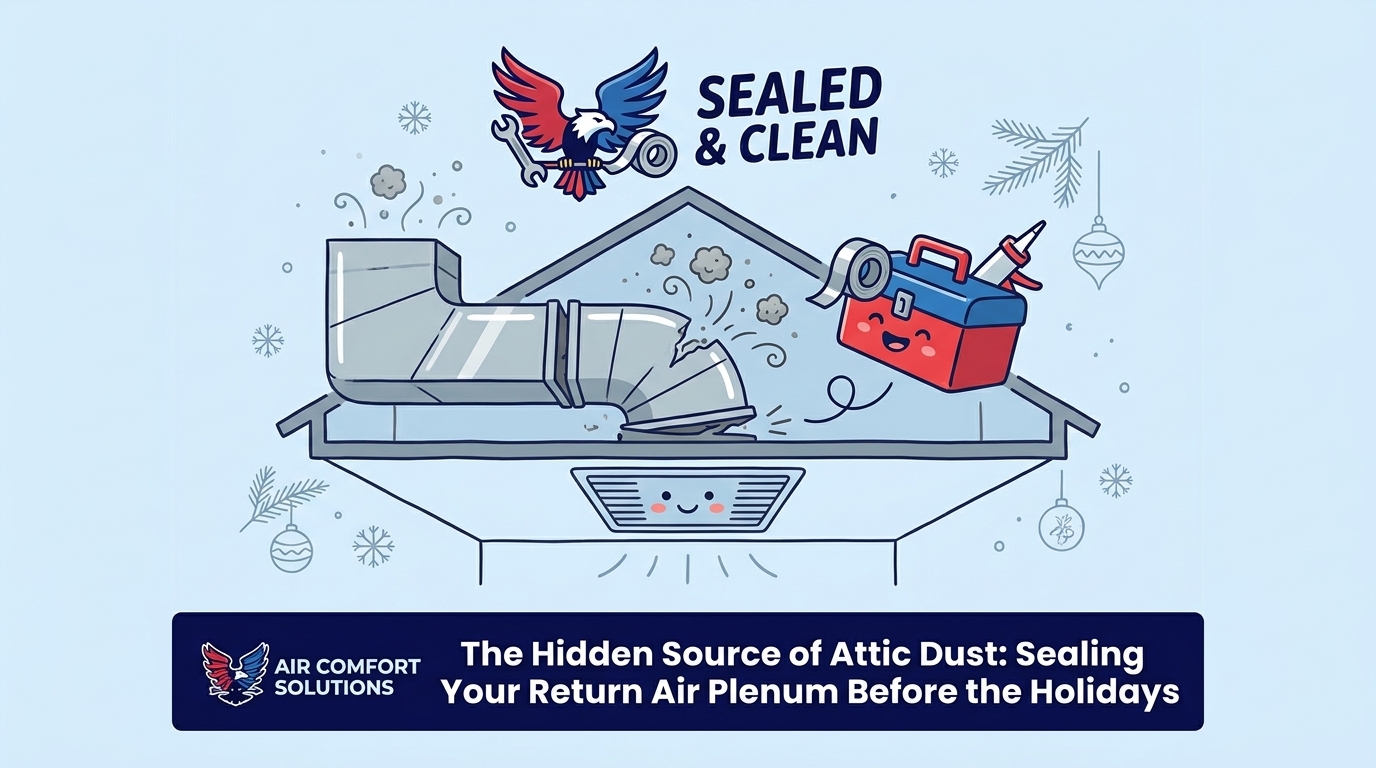
The Value of Sealing Your Return Air Plenum Before the Holidays
Most homeowners buy expensive filters to fix dusty air, not realizing a leaky return plenum in the attic is the real culprit. See why sealing it now saves your holiday gatherings.
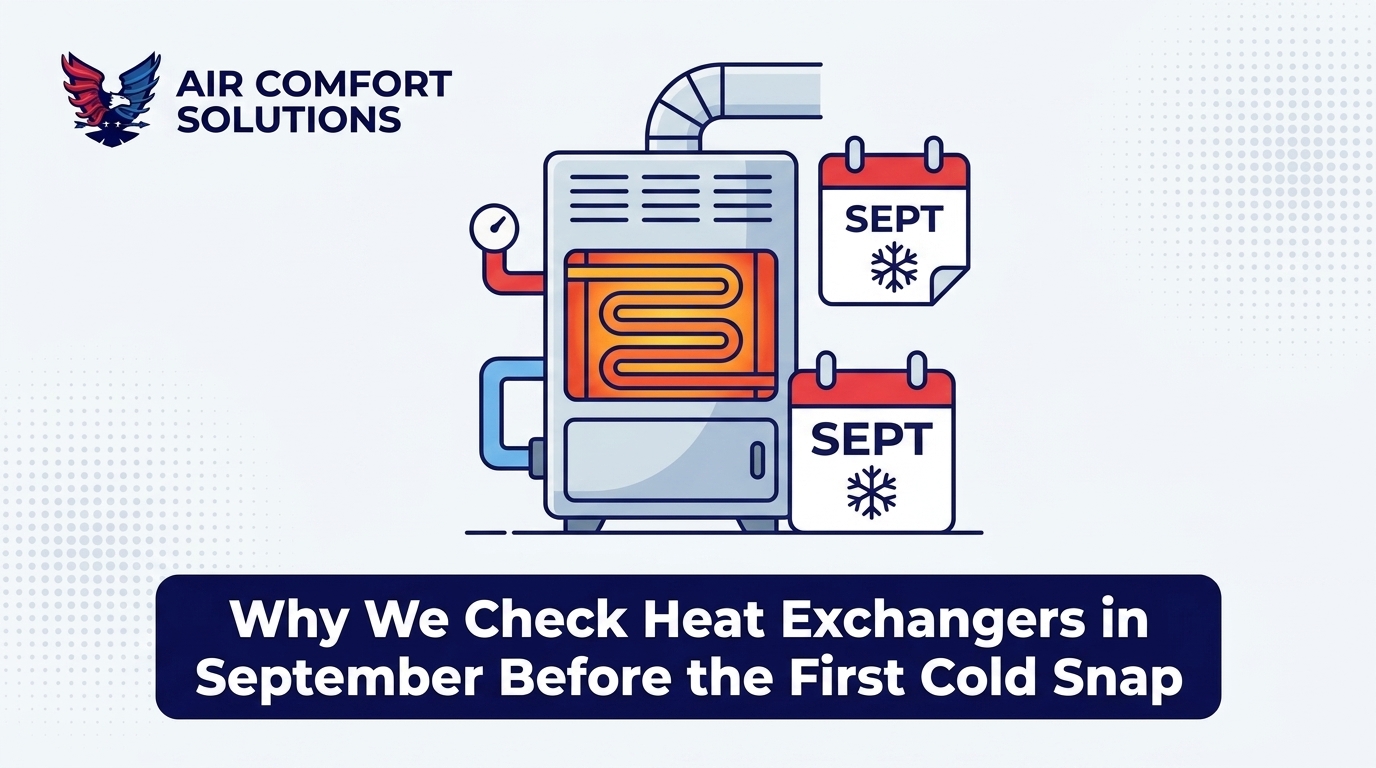
If you are wondering exactly why we check heat exchangers in September before the first cold snap, the answer comes down to the hidden dangers our technicians at Air Comfort Solutions routinely uncover inside dormant gas furnaces. Late summer and early fall in Southeast Texas often feel like an endless continuation of summer. With daytime temperatures regularly hovering in the 80s and 90s, the last thing on your mind is turning on the heat. However, this mild September pre-heating transition creates a false sense of security. While your air conditioner is still working hard to keep you comfortable, your heating system sits entirely dormant, harboring potential hidden risks that only reveal themselves when forced to operate at maximum capacity.
Waiting for the first freezing night of the year to discover a problem with your heating system is simply too late. When October brings those sudden, steep temperature drops, a compromised furnace can quickly become a serious safety hazard rather than just a mechanical inconvenience. Scheduling a proactive inspection while the weather is still warm is a critical safety decision that protects your household from invisible threats. For homeowners looking to secure their comfort early, investing in professional HVAC services ensures your equipment is thoroughly evaluated by our team before emergency demand spikes.
To understand why pre-season inspections are so critical, you have to understand the heart of your gas furnace: the heat exchanger. This component is a highly engineered metal shield, usually made of steel or a specialized alloy, designed to keep the toxic byproducts of combustion completely separate from the clean air circulating through your home. When your furnace burns natural gas to create heat, it produces exhaust gases, including carbon monoxide. The heat exchanger contains these dangerous gases while simultaneously absorbing the intense heat of the burner flames. The blower motor then pushes your indoor air across the outside of this hot metal shield, warming the air before it travels through your vents.
Because this metal component is subjected to extreme temperature fluctuations, it is highly susceptible to a phenomenon known as thermal fatigue. Every single time your furnace cycles on, the metal heats up and expands. When the cycle ends, the metal cools down and contracts. Over thousands of heating cycles across the lifespan of furnaces in the Pinehurst TX area, this constant expansion and contraction takes a massive toll on the structural integrity of the metal.
In our years of servicing local heating systems, we routinely see how this relentless stress eventually causes microscopic stress fractures to form. These hairline cracks are a physical inevitability in older gas furnaces, not necessarily a sign of poor manufacturing or a defective unit. Metal can only stretch and shrink so many times before it begins to tear. The danger lies in the fact that these microscopic cracks often remain completely invisible to the untrained eye, especially when the furnace is sitting cold and dormant during the summer months.
The internal combustion process relies on a delicate balance of airflow and airtight seals to function safely. Here is how the anatomy of the process breaks down:
• Burner ignition: Gas valves open and ignite, shooting flames directly into the hollow tubes or clamshells of the heat exchanger.
• Heat transfer: The metal rapidly absorbs the thermal energy from the flames, reaching temperatures of several hundred degrees.
• Airflow distribution: The primary blower motor activates, forcing cold indoor air over the exterior surface of the glowing hot metal, which warms the air instantly.
• The airtight seal: The entire system relies on the absolute integrity of the metal walls. If even a microscopic breach exists, the pressure from the blower motor can alter the flame and push toxic exhaust gases directly into the clean air supply.
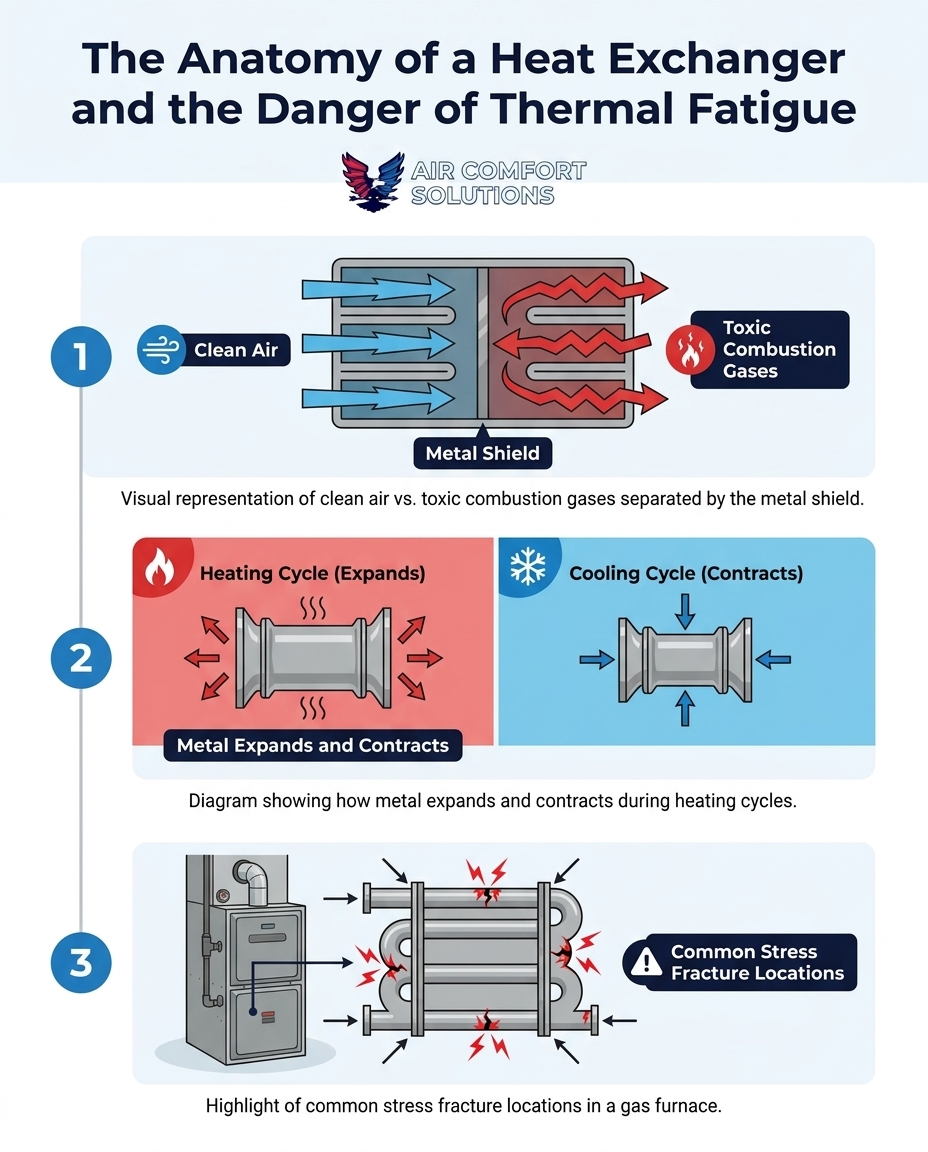
The fundamental physics of thermodynamics play a massive role in why our team stress-tests heating systems during the September pre-heating transition. It is a well-known scientific principle that metal expands when exposed to high heat. What this means for your furnace is that a microscopic hairline crack that is tightly closed when the system is cold can open up significantly once the furnace reaches its peak operating temperature.
In Southeast Texas, the transition into fall is rarely a gradual cooldown. At Air Comfort Solutions, we frequently respond to abrupt fall weather fronts that require an immediate, overnight transition from air conditioning to emergency heating. During these sudden cold snaps, your furnace goes from sitting completely idle for months to running continuous, extremely hot cycles to fight off the freezing outdoor temperatures.
This rapid shift forces the metal to expand rapidly and dramatically. A crack that did not leak any carbon monoxide during a brief, mild test run in the afternoon might easily stretch open to a dangerous width during a freezing night when the system is running nonstop. The expanded gap allows toxic combustion gases to escape the combustion chamber and mix directly with the breathable air being pushed into your living space.
This specific thermal behavior is exactly why stress-testing the system before the cold snap hits is non-negotiable. Our professional evaluation simulates these high-stress conditions to monitor how the metal reacts under a heavy thermal load, ensuring that no hidden fractures open up when your family needs the heat the most.
The primary reason a cracked heat exchanger is considered a critical safety emergency is the threat of carbon monoxide (CO) exposure. According to data from the Centers for Disease Control and Prevention (CDC), carbon monoxide is a colorless, odorless, and tasteless gas responsible for severe health hazards, hundreds of tragic fatalities, and thousands of emergency room visits every single year.
When our technicians discover a cracked heat exchanger, it means the dangerous exhaust gases that are supposed to be safely vented out of your roof are instead caught by the blower motor. The blower then distributes this toxic gas evenly throughout every room in your home via the ductwork. Because you cannot see or smell carbon monoxide, a family can easily be exposed to dangerous levels without ever realizing there is a problem.
Why winter increases the danger: The risk of carbon monoxide poisoning skyrockets during the colder months. When the temperature drops, homeowners tightly shut all windows and doors, sealing up the house to trap the heat inside. This lack of fresh air ventilation means that any CO leaking from the furnace becomes trapped indoors, allowing the concentration of the toxic gas to build up rapidly.
The role of CO detectors: While carbon monoxide detectors are absolutely essential life-saving devices that every home must have, they are strictly a last line of defense. A detector only sounds an alarm after the toxic gas has already entered your living space. Relying solely on a detector is a dangerous gamble; proactive maintenance is the only way to prevent the leak from happening in the first place.
A common misconception among homeowners is that a quick glance inside the furnace cabinet is enough to determine if the system is safe to operate. Based on our extensive field experience, merely shining a flashlight across the visible portions of a heat exchanger will almost always miss the microscopic hairline fractures that cause the most danger. The geometry of a furnace is complex, and the most vulnerable stress points are often hidden deep within the curved tubes or behind secondary components.
Because these cracks are so difficult to spot, our professional HVAC technicians rely on a rigorous, highly specialized diagnostic process. At Air Comfort Solutions, we enforce strict safety standards and utilize specialized inspection processes that go far beyond a basic visual check. Our goal is to protect families in the Pinehurst TX area by identifying structural weaknesses before they have a chance to fail during a cold front. This level of thoroughness requires licensed professionals and advanced tools; it is never a DIY project.
When our technicians evaluate a heating system, we use a combination of advanced technology and proven diagnostic methods to ensure the heat exchanger is completely intact:
1. Combustion gas analyzers: This highly sensitive tool measures the exact chemical composition of the exhaust gases in the flue. By monitoring oxygen and carbon monoxide levels before and after the blower motor turns on, our technicians can detect tiny fluctuations that indicate a breach in the metal.
2. Infrared and endoscopic cameras: Specialized flexible cameras allow our professionals to see deep inside the heat exchanger tubes, inspecting the hidden curves and welds for signs of rust, scaling, or hairline fractures that are invisible from the outside.
3. Flame interference checks: Technicians closely observe the behavior of the burner flames when the primary blower engages. If the flames waver, dance, or change color, it is a strong indicator that air from the blower is pushing through a crack and disrupting the combustion process.
For homeowners who do not rely on natural gas, the conversation around heating safety looks a bit different. As we approach the September pre-heating transition, many residents ask our team if their electric systems pose the same hidden dangers. The short answer is no. Because heat pumps operate entirely on electricity and use refrigerant to transfer heat from the outside air into your home, they do not burn fossil fuels. Without combustion, there is no traditional heat exchanger, no exhaust fumes, and absolutely zero risk of carbon monoxide leaks.
This inherently safe design makes heat pump systems an incredibly popular alternative for regional climates with moderate winters, like ours. However, just because a heat pump won't leak carbon monoxide does not mean it can be ignored until the first freeze. We remind our customers that these systems still require rigorous pre-season preparation to ensure they operate efficiently and reliably when the temperature drops.
• Gas Furnace — Heating Method: Burns natural gas to heat a metal exchanger — Carbon Monoxide Risk?: Yes (High risk if cracked) — Pre-Season Maintenance Focus: Heat exchanger integrity, burner cleaning, flue inspection, gas pressure checks
• Heat Pump — Heating Method: Uses electricity and refrigerant to move heat — Carbon Monoxide Risk?: No (Zero risk) — Pre-Season Maintenance Focus: Refrigerant charge, defrost control board testing, electrical contactors, coil cleaning
During a fall maintenance visit for a heat pump, our technicians focus heavily on verifying the exact refrigerant charge, testing the defrost cycle controls, and tightening all high-voltage electrical connections. A heat pump that is low on refrigerant will struggle to heat your home and drive up your utility bills significantly. Additionally, homeowners considering upgrading their older gas furnaces to electric alternatives should note that general energy rebates or federal tax credits may apply to qualifying heat pump installations, making the switch more accessible (be sure to verify current programs with your utility provider or tax professional).
While verifying the integrity of the heat exchanger is the most critical safety check we perform, it is only one part of a much broader seasonal strategy. Preparing your home for the winter requires a comprehensive approach to ensure every single component of your HVAC system is ready for the abrupt shift in weather. A thorough fall tune-up addresses both safety and efficiency, protecting your equipment from unnecessary wear and tear.
During a comprehensive fall inspection in the Pinehurst TX area, our professionals will systematically evaluate the entire heating cabinet. Here is what a complete readiness check entails based on the common issues we see locally:
• Testing safety limit switches: These vital sensors are designed to shut the furnace down automatically if it begins to overheat. If a limit switch fails, the furnace can reach dangerous temperatures, increasing the risk of fire or severe metal damage.
• Inspecting the flue pipe: The ventilation system must be completely clear of obstructions, such as bird nests or debris, to ensure toxic exhaust gases vent safely outside.
• Cleaning the flame sensor and igniter: A dirty flame sensor will cause the furnace to short-cycle or fail to light altogether, leaving you in the cold on a freezing night.
• Evaluating the blower motor: Checking the amperage draw and cleaning the blower wheel ensures the system can push enough air through the house without straining the electrical components.
Taking care of these details before the cold weather hits provides immense peace of mind. Knowing your system is safe, clean, and operating at peak efficiency means you won't have to panic when the forecast calls for a freeze. For the best long-term protection, enrolling in a structured maintenance program is highly recommended. You can learn more about how to keep your system running smoothly year-round by exploring our comprehensive Texas AC and heating maintenance guide.
Yes, a cracked heat exchanger is extremely dangerous and is considered a critical safety emergency. The crack allows toxic combustion gases, including deadly carbon monoxide, to escape the combustion chamber and mix with the clean air being blown into your home. Because carbon monoxide is colorless and odorless, prolonged exposure can lead to severe health hazards without the occupants ever realizing there is a leak.
You usually cannot tell if a heat exchanger is cracked just by looking at it, which is why professional inspections are mandatory. Symptoms might include a soot buildup inside the furnace, a strange odor coming from the vents, or a burner flame that dances and flickers when the blower motor turns on. However, the most reliable way to know is by having a licensed technician perform a combustion analysis during the September pre-heating transition.
No, a cracked heat exchanger cannot be safely patched, welded, or repaired. The intense thermal fatigue and extreme temperature fluctuations inside the furnace will quickly destroy any attempted repair, recreating the carbon monoxide hazard. When our technicians discover a crack, the only safe and code-compliant solutions are to replace the heat exchanger component itself or replace the entire furnace.
A furnace heat exchanger should be thoroughly inspected by a professional at least once a year, ideally in the early fall before the heating season begins. Annual stress-testing and combustion analysis ensure that any microscopic signs of metal fatigue are caught early. Skipping these annual checks significantly increases the risk of an undetected crack widening during a heavy winter freeze.
A brief, faint dusty smell is normal the very first time you turn on the heat, as the furnace burns off dust that settled over the summer. However, if the furnace smells strongly of exhaust, sulfur, or chemical fumes, it usually indicates a venting problem or a breached heat exchanger. You should turn the system off immediately and call a professional to investigate the source of the combustion gases.
Carbon monoxide detectors are essential backups, but they do not catch all leaks immediately and should never be used as a substitute for preventive maintenance. Detectors only sound an alarm once the gas has already entered the living space and reached a specific concentration level. Finding a compromised heat exchanger through proactive professional testing is the only way to prevent the gas from entering your home in the first place.
The transition from cooling to heating happens fast in the Pinehurst TX area, and your furnace needs to be ready to perform safely at a moment's notice. After years of serving this community, we know that finding a microscopic crack in September prevents a highly dangerous carbon monoxide situation from developing later in the season when your system is running at full capacity. Ultimately, scheduling a proactive inspection is about securing total peace of mind for your household. Don't wait for the first freezing night to find out if your heating system is safe to operate. Take action now and ensure your home is fully prepared for winter by exploring our comprehensive HVAC maintenance plan today.


Zane came out and did an amazing job! Super friendly, honest and transparent about the work that needed to be done. This is my second time working with Air Comfort Solutions and they’re my go to for HVAC services. Highly recommend.
God's AMAZING grace sent us Robert and Zane. We have been without air in this Texas heat for six weeks and four days. We've had a few contractors give us quotes all trying to upsell when we're at a low point. But not the guys at Air Comfort Solutions. They came in assessed our situation, gave us honest feedback, and showed us the issues as they proceeded with the assessment for clear understanding. We highly recommend them for their professionalism, quality products, and fair pricing. We hands down support them for all the work they do 💯 %.
Robert and Zane gone above and beyond to make the process easy and affordable.
Would definitely recommend!!
I’m writing this review to let everyone know that Air Comfort Solutions is the company to work with. I know the owner ( Robert) for several years now. He has been taking care of my residential and business work orders. Robert is professional, knowledgeable and will save you money. I just want to thank Robert for great job you have been doing for me.