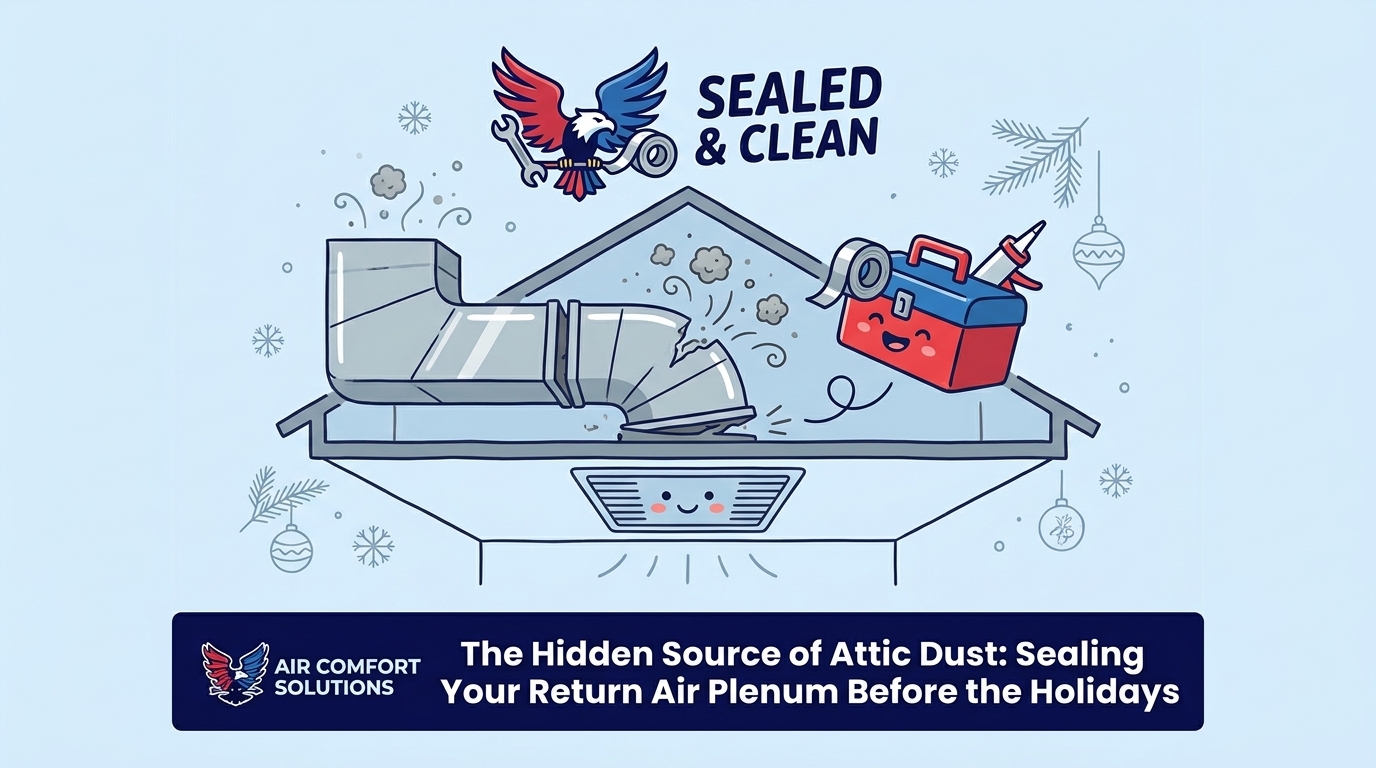
The Value of Sealing Your Return Air Plenum Before the Holidays
Most homeowners buy expensive filters to fix dusty air, not realizing a leaky return plenum in the attic is the real culprit. See why sealing it now saves your holiday gatherings.
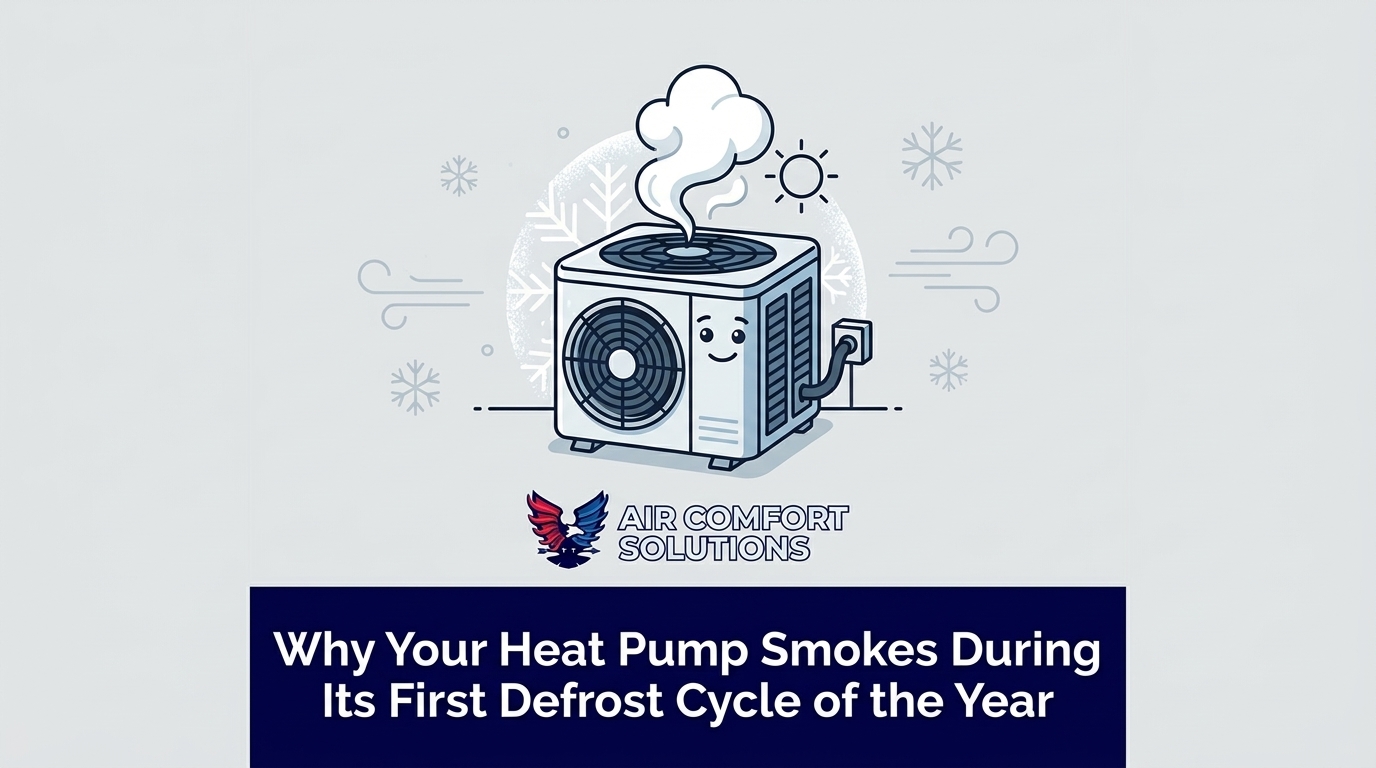
Are you staring out the window wondering why your heat pump smokes during its first defrost cycle of the year, trying to decide if you need to grab the fire extinguisher? Waking up on a crisp morning in Pinehurst TX, switching your thermostat to heating mode for the first time, and suddenly seeing a massive cloud of white vapor billowing from your outdoor unit is a startling experience. The immediate panic sets in as you face a critical decision point: do you sprint to the breaker panel to shut the system down and call for an emergency repair, or is this dramatic visual actually a normal function of your heating equipment?
Take a deep breath. In the vast majority of cases, that alarming cloud outside your window is not smoke at all—it is harmless water vapor. When your system transitions into heating mode, it occasionally needs to clear away frost that builds up on the outdoor coils. This process is completely normal and indicates that your equipment is actively maintaining itself. For reliable HVAC services to keep your system safe and efficient all season long, our team at Air Comfort Solutions is always ready to help.
When you spot a cloud rising from your outdoor unit during those early fall cold mornings in September, your first priority is verifying that the system is safe. Water vapor behaves very differently than actual combustion smoke, and you can usually tell the difference within a few seconds just by observing the cloud and using your senses. If you ever feel unsure, our local HVAC experts at Air Comfort Solutions are always available to help homeowners quickly diagnose these visual signs over the phone.
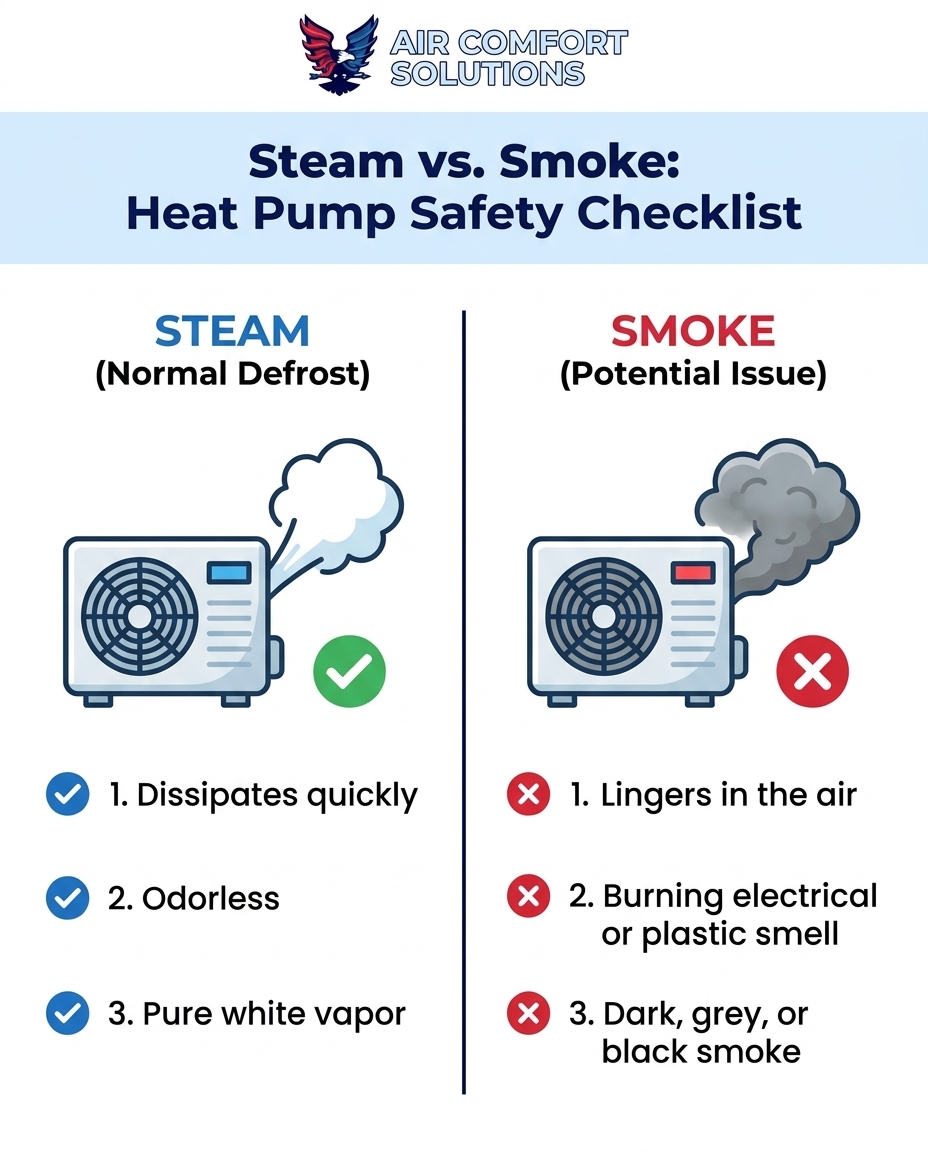
Use this quick checklist to de-escalate your panic and verify what you are seeing:
• Visual behavior (Dissipation): Steam is incredibly light and dissipates rapidly into the surrounding air, usually vanishing within a few feet of the unit. Dangerous smoke lingers, drifts across the yard, and creates a persistent haze.
• Olfactory cues (Smell): Steam is simply evaporated water; it is completely odorless. Actual smoke carries a distinct, acrid smell. If you detect the sharp scent of burning electrical wires, melting plastic, or a metallic ozone odor, you have a real problem.
• Color and opacity: Normal steam is pure white or slightly translucent, looking much like the fog you see on a cold morning. Dangerous smoke from failing components is often dark, grey, or black.
• System sounds: A normal steaming event is usually accompanied by a "whoosh" sound as the system shifts gears, followed by the quiet hum of the compressor. Smoke is often accompanied by aggressive grinding, popping, or electrical buzzing.
If your observations point to normal water vapor, you can rest easy. However, if your system needs professional attention, scheduling prompt heat pump repair and installation ensures your home stays warm and safe.
To understand why your unit looks like a fog machine, it helps to know a little bit about the technical mechanics of how a heat pump operates in cold weather. Unlike a traditional gas furnace that burns fuel to create heat, a heat pump transfers heat from one place to another. In the winter, it extracts ambient heat from the outside air and pumps it into your home.
When the outdoor coil absorbs heat from the surrounding air, the surface temperature of that coil drops significantly—often dipping well below freezing. As warm, moisture-laden air comes into contact with this freezing coil, condensation forms. Because the coil is so cold, that condensation instantly turns into frost. Many homeowners in Pinehurst TX are surprised to learn that this frost accumulation can happen even when ambient outdoor temperatures are sitting comfortably in the 40s. In our years of servicing local homes, we've found that people often don't realize the coil itself operates at a much colder temperature than the air around it.
If frost were allowed to build up indefinitely, it would eventually form a solid block of ice, suffocating the outdoor unit and preventing it from absorbing any heat at all. To prevent this, your system is equipped with a defrost control board and a reversing valve. When the system detects too much ice, it triggers a defrost cycle.
The reversing valve temporarily switches the system back into cooling mode. This takes the hot, pressurized refrigerant gas from inside your home and sends it directly into the outdoor coil. The sudden blast of intense heat melts the accumulated frost rapidly. When that hot refrigerant hits the freezing, wet ice, the frost does not just melt—it flash-evaporates. This rapid evaporation is what creates the sudden, dense cloud of white vapor that looks so alarming from your living room window.
If you have ever lived in a dry, arid climate, you might have never noticed a defrost cycle before. However, the local environmental factors in our region play a massive role in the visual intensity of the steam plume. Our technicians at Air Comfort Solutions frequently explain to customers that early fall weather in Southeast Texas—characterized by mild, comfortable days followed by suddenly crisp, high-humidity mornings—creates the perfect physical conditions for massive steam clouds.
The thickness of the vapor cloud depends entirely on the moisture content of the ambient air. In early fall cold mornings in September, the relative humidity in our area is often extremely high, pushing close to the dew point. When the rapidly heating outdoor coil flash-evaporates the frost, that new water vapor crashes into air that is already completely saturated with moisture.
• Ambient Moisture — Dry Climates (e.g., Desert Southwest): Low humidity; air can absorb vapor easily. — Southeast Texas (e.g., Pinehurst): High humidity; air is already saturated.
• Visual Steam Plume — Dry Climates (e.g., Desert Southwest): Thin, wispy, or completely invisible. — Southeast Texas (e.g., Pinehurst): Dense, opaque, and highly visible white cloud.
• Frost Accumulation Frequency — Dry Climates (e.g., Desert Southwest): Rare, due to lack of moisture in the air. — Southeast Texas (e.g., Pinehurst): Frequent, especially during morning temperature drops.
Because the local air cannot absorb the new moisture quickly, the vapor forms a dense, opaque cloud that looks exactly like thick white smoke. If you live in Pinehurst, TX, seeing a massive cloud of white steam simply means your system is successfully clearing heavy frost and operating exactly as the manufacturer intended.
While seeing steam is normal, the duration of the event is a key indicator of your system's health. Setting proper expectations for the length of a normal defrost cycle ensures you know when to let the system work and when to call for help. When our team performs pre-heating season tune-ups, we always verify that a properly functioning unit in Pinehurst TX follows a very specific sequence of operations.
The standard sequence of a normal defrost cycle:
1. The cycle initiates: The system's sensors detect restricted airflow due to frost buildup and trigger the defrost board.
2. The outdoor fan stops: You will notice the large fan blades on the top or side of your outdoor unit stop spinning. This is intentional. The system stops the fan to allow heat to rapidly build up in the coil without the cold wind blowing it away.
3. The reversing valve shifts: You may hear a loud "whoosh" or a brief hissing sound as the pressurized refrigerant reverses direction to send heat outdoors.
4. Auxiliary heat engages: Because the system is temporarily in cooling mode, it would normally blow cold air into your home. To prevent this, the system automatically turns on your indoor auxiliary or backup heat strips to keep you warm.
5. The cycle terminates: A normal defrost cycle lasts between 5 to 15 minutes. Once the sensors detect that the coil is warm enough and all ice has melted, the reversing valve shifts back, the outdoor fan kicks on, and normal heating resumes.
If you observe your unit staying in defrost mode (with the fan off and steam rising) for significantly longer than 15 minutes, or if it cycles in and out of defrost every few minutes, there may be a malfunctioning sensor or a failing control board that requires professional testing.
Differentiating normal operation from an actual system failure is vital for protecting your home. While a short burst of steam on early fall cold mornings in September is expected, there are several distinct warning signs that indicate professional intervention is genuinely required. Based on the emergency repair calls we field every fall at Air Comfort Solutions, knowing these problem-cause-solution scenarios will help you act quickly.
• Problem: The unit is encased in a solid block of thick ice.
Cause: A light coating of white frost is normal, but solid, clear ice that looks like a glacier means the defrost control board, sensors, or reversing valve has completely failed. The system cannot melt the ice, and the compressor is at risk of fatal damage.
Solution: Turn the system off at the thermostat immediately and call for a repair. Do not attempt to chip the ice away with tools, as you will easily puncture the delicate refrigerant coils.
• Problem: The "smoke" smells like burning plastic or ozone.
Cause: This is actual smoke, not steam. It indicates a severe electrical short, a melting wire harness, or a failing capacitor inside the electrical panel of the unit.
Solution: Do not wait. Shut the system down completely by flipping the breaker in your main electrical panel, and contact an emergency HVAC technician.
• Problem: The system never returns to heating mode.
Cause: The reversing valve is mechanically stuck. The system is trapped in cooling mode, blowing cold air into your house while the outdoor unit runs continuously.
Solution: Turn the system off and schedule a service call to have the valve tested and potentially replaced.
• Problem: The smoke is accompanied by violent screeching.
Cause: While a "whoosh" is normal, loud metal-on-metal screeching or aggressive grinding points to failing compressor bearings or a dying fan motor. If you are hearing these sounds, reviewing a guide on strange HVAC noises and what they mean can help you identify the culprit.
Solution: Shut the system down to prevent catastrophic mechanical failure and request a professional diagnostic.
When the temperature drops in Pinehurst TX, homeowners naturally have questions about the unusual behaviors of their heating systems. Understanding these common scenarios can save you from unnecessary panic. The best way to prevent unexpected winter surprises is by staying proactive with a routine maintenance plan, which allows our technicians to ensure your defrost sensors and electrical components are tested before the cold weather arrives.
No, it is never normal for a heat pump to produce actual smoke. What appears to be smoke is almost always water vapor (steam) generated during the system's routine defrost cycle. This visual confusion is incredibly common because the dense white vapor billowing from the unit looks remarkably similar to smoke, especially when viewed from a distance on a cold morning.
White "smoke" is simply steam created when the unit melts accumulated frost off its outdoor coils. When the system redirects hot refrigerant to the freezing, wet outdoor coil, the rapid temperature change causes the frost to flash-evaporate. As long as the vapor is pure white, odorless, and dissipates quickly, it is a sign that your system is maintaining itself properly and preventing ice buildup.
A typical defrost cycle lasts between 5 and 15 minutes. The exact duration depends on several factors, including the amount of frost buildup, the ambient outdoor temperature, and the specific humidity levels that day. If your system remains in defrost mode for more than 20 minutes without returning to normal heating, you should contact a professional to check for a faulty sensor or stuck valve.
The outdoor fan stops spinning, the unit may make a distinct "whoosh" sound as the internal valve shifts, and a cloud of white steam rises from the top of the cabinet. You will likely see water dripping from the bottom of the unit as the frost melts away. During this process, your indoor air should still feel warm, as the system utilizes auxiliary heat strips to maintain your comfort.
While highly unlikely, electrical components in any HVAC system can fail and cause a small localized fire. Warning signs of a genuine electrical fire include tripped circuit breakers, the smell of scorched wires or melting plastic, and dark grey or black smoke that lingers in the air. Routine professional tune-ups are the most effective way to prevent these rare electrical hazards by catching loose connections early.
No, you should let the defrost cycle finish completely. Interrupting the cycle by turning off the thermostat will leave partially melted ice on the coils, which will quickly refreeze into a solid block, severely reducing your system's efficiency and potentially causing mechanical damage. The only exception is if you smell burning electrical components, in which case you should shut the system down at the breaker immediately.
Seeing a massive cloud of steam rising from your outdoor unit during those early fall cold mornings in September is certainly a startling way to start your day. However, it is almost always a completely normal, harmless part of the seasonal transition. Validating your concerns and checking on the system was exactly the right move for your home's safety—it is always better to verify that the "smoke" is just water vapor rather than ignoring a potential hazard.
To ensure your system continues to handle the changing weather smoothly, proactive care is essential. A pre-heating season tune-up gives our Air Comfort Solutions professionals the chance to test your defrost control board, calibrate sensors, and ensure your auxiliary heat strips are functioning correctly before the deepest winter chill sets in. If you still have doubts about your system's behavior or want to guarantee it is ready for the months ahead, reach out to our local experts today to schedule a thorough inspection.


Zane came out and did an amazing job! Super friendly, honest and transparent about the work that needed to be done. This is my second time working with Air Comfort Solutions and they’re my go to for HVAC services. Highly recommend.
God's AMAZING grace sent us Robert and Zane. We have been without air in this Texas heat for six weeks and four days. We've had a few contractors give us quotes all trying to upsell when we're at a low point. But not the guys at Air Comfort Solutions. They came in assessed our situation, gave us honest feedback, and showed us the issues as they proceeded with the assessment for clear understanding. We highly recommend them for their professionalism, quality products, and fair pricing. We hands down support them for all the work they do 💯 %.
Robert and Zane gone above and beyond to make the process easy and affordable.
Would definitely recommend!!
I’m writing this review to let everyone know that Air Comfort Solutions is the company to work with. I know the owner ( Robert) for several years now. He has been taking care of my residential and business work orders. Robert is professional, knowledgeable and will save you money. I just want to thank Robert for great job you have been doing for me.