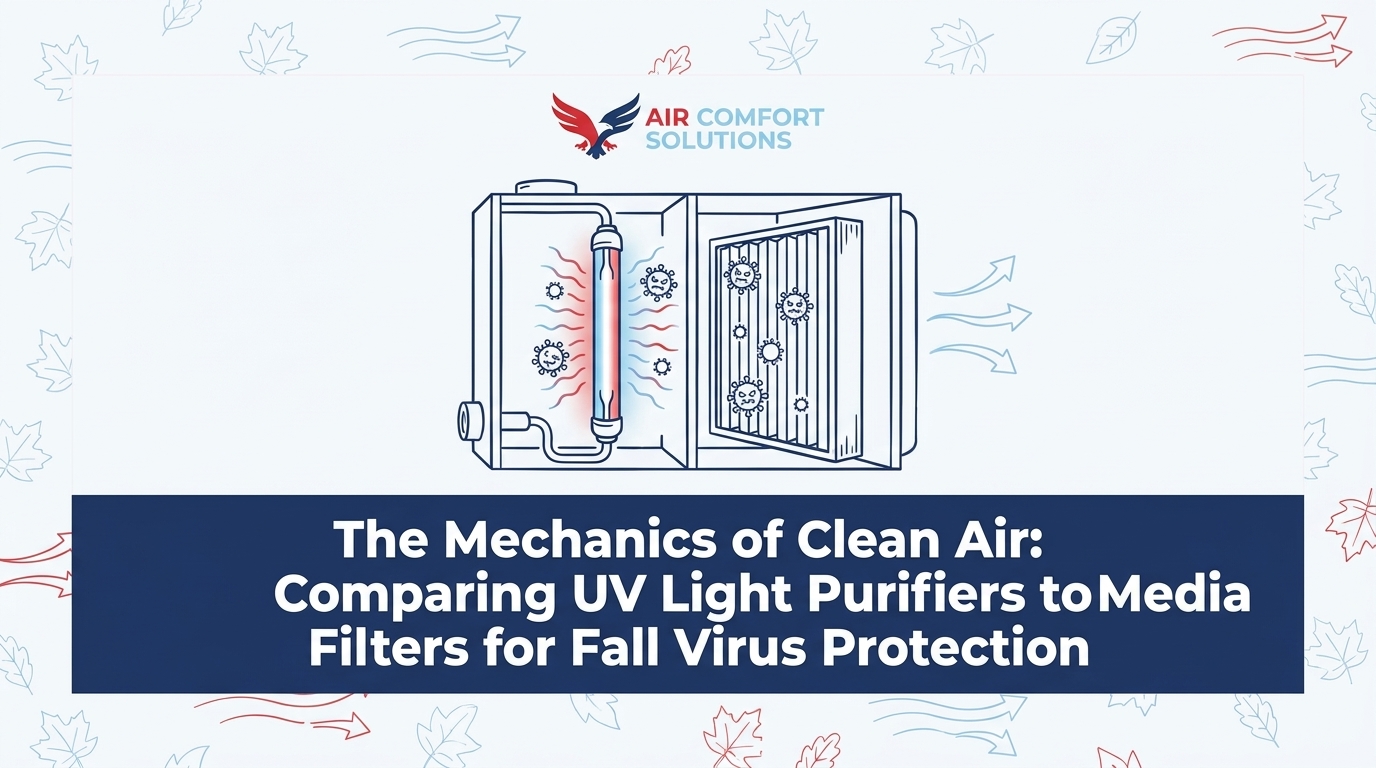
Comparing UV Light Purifiers to Media Filters for Fall Virus Protection
Deciding between biological neutralization and particulate capture? See the exact differences between UV lights and media filters to protect your indoor air this fall.
The average lifespan of an air conditioner in the South is significantly shorter than what most manufacturers and national statistics suggest — and for homeowners in Pinehurst, TX and the surrounding North Harris County area, that gap matters a great deal.
Nationally, the U.S. Department of Energy puts the typical AC lifespan at 13 to 15 years, with well-maintained systems sometimes reaching 20 years. But here in the South, the real-world numbers tell a different story. Southern systems routinely run 3,000 to 4,000 hours per year — compared to roughly 1,000 hours in northern states. That difference adds up fast. All those extra hours mean more wear on compressors, more moisture cycling through coils, and faster degradation overall.
Here is a quick breakdown of what homeowners in the South can realistically expect:
Southern AC Lifespan at a Glance
• Central Split AC — National Average: 15-20 years — South (Inland): 10-15 years — South (Coastal): 8-12 years
• Heat Pump — National Average: 15-20 years — South (Inland): 8-12 years — South (Coastal): 8-10 years
• Ductless Mini-Split — National Average: 15-20 years — South (Inland): 10-16 years — South (Coastal): 10-14 years
• Packaged Unit — National Average: 12-17 years — South (Inland): 8-12 years — South (Coastal): 7-10 years
If your system is approaching the 10-year mark anywhere in the Gulf Coast region, it is already entering the window where major repairs and replacement decisions become real considerations.
The reasons behind this shortened lifespan are not random. Extreme heat, high humidity, salt air, and near year-round operation all combine to stress AC components in ways that cooler climates simply never experience. The sections below break down each of these factors in detail — and explain what you can do to get the most life out of your system.

Average lifespan of an air conditioner in the south helpful reading:
• how to extend the life of your ac in texas
• when should you replace your ac in a hot climate
• why do ac units wear out faster in hot climates
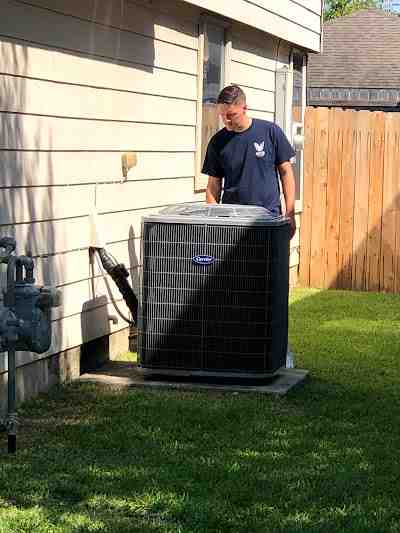
When HVAC manufacturers print their glossy brochures, they love to boast about systems lasting up to two decades. While that might be true in mild northern climates where the air conditioner only runs for a few weeks in July, it is an optimistic fantasy here in Southeast Texas.
The national average lifespan of a central air conditioner hovers around 15 to 20 years. However, the real-world operational reality for systems in our region is closer to 10 to 15 years. To understand why this discrepancy exists, we have to look closely at the Average Lifespan of an HVAC System in Texas.
The concept of "mechanical miles" is the best way to visualize this. Think of your air conditioner like a car. If you drive 5,000 miles a year, your vehicle will last many more calendar years than if you drive 30,000 miles a year. A northern AC unit accumulates very few "mechanical miles" each year. Meanwhile, a system operating in Houston, Spring, or Tomball runs almost continuously from April through October, and frequently cycles on during warm winter days. This massive volume of operating hours leads to accelerated system fatigue, wearing out critical moving parts like the compressor and fan motors years ahead of the national median.
Our local climate falls squarely into what meteorologists and building scientists classify as a hot-humid climate zone. This classification carries heavy implications for mechanical equipment.
If you want to know Why Do AC Units Wear Out Faster in Hot Climates, the answer lies in the sheer volume of cooling degree days (CDDs) we experience. While the national average sits around 1,000 to 1,500 CDDs per year, Southeast Texas regularly sees well over 2,500 to 3,000 cooling degree days annually.
This sustained thermal load forces the compressor—the heart of your AC system—to operate under high pressure and intense heat for hours on end. Over time, this constant heat degrades the internal lubricants, increases friction, and stresses the electrical windings, culminating in premature compressor failure.
Even within the South, geography plays a major role in determining how long your cooling system will survive. The closer a home is to the Gulf Coast, the shorter the equipment's life expectancy becomes.
To understand how this plays out locally, we can look at How Southeast Texas Climate Affects Your HVAC System. In inland areas like Montgomery, Conroe, and Plantersville, a well-maintained split system can realistically reach 12 to 15 years of service. However, as you move south toward Houston and coastal areas, that average drops to 8 to 12 years. The combination of intense heat, stagnant humidity, and airborne corrosive elements acts as a triple-threat that steadily eats away at the structural and mechanical integrity of outdoor condenser units.
It is not just the heat that punishes our cooling systems; the environment itself is actively hostile to mechanical machinery. The unique atmospheric conditions of Southeast Texas present several distinct challenges that cut an air conditioner's life short.
To get a complete picture of these challenges, it helps to read about How Hot Humid Climate Shortens HVAC Lifespan. High humidity, salt-laden air, and severe weather events work in tandem to degrade system components long before their time.
Humidity places a massive physical burden on an air conditioner. Your AC does not just cool the air; it also acts as a giant dehumidifier. In fact, removing moisture from the air (the latent heat load) requires a tremendous amount of energy and mechanical work. On a typical humid Texas summer day, your evaporator coil must extract gallons of water from the indoor air every single hour. This constant moisture exposure keeps the indoor coil wet, creating a prime environment for biological growth and microscopic formicary pitting—a specific type of copper corrosion that causes tiny refrigerant leaks.
For homes located closer to the coast, salt air introduces an even more destructive force. High-velocity winds and coastal storms carry salt-laden moisture miles inland. When this salt air passes through the outdoor condenser coil, it accelerates galvanic corrosion. The aluminum fins begin to turn to white powder and separate from the copper tubing, which drastically reduces the unit's ability to transfer heat. Once heat transfer is compromised, the compressor has to work twice as hard, leading to rapid system failure.
In milder climates, an air conditioner gets a long winter nap. In our service areas—from Magnolia and Pinehurst to The Woodlands and Spring—your AC rarely gets a true break. Even during the winter months, high humidity and sudden warm fronts can force your system to cycle on.
This near-constant operation means your system experiences continuous thermal cycling—the constant heating up and cooling down of electrical and mechanical parts. This cycling causes metals to expand and contract, which can loosen electrical connections, weaken solder joints, and wear out the contactors and run capacitors that start your system.
Not all air conditioning systems are built the same way, and different configurations handle the brutal Southern climate differently.
• Central Split AC — Average Southern Lifespan: 10-15 Years — Primary Wear Factors: High run hours, compressor stress, coil corrosion — Best Suited For: Standard single-family homes with existing ductwork
• Air-Source Heat Pump — Average Southern Lifespan: 8-12 Years — Primary Wear Factors: Year-round operation, reversing valve wear — Best Suited For: Homes looking for all-in-one heating and cooling
• Ductless Mini-Split — Average Southern Lifespan: 10-16 Years — Primary Wear Factors: Inverter wear, electronic complexity — Best Suited For: Older homes, additions, and localized zone cooling
• Packaged Unit — Average Southern Lifespan: 8-12 Years — Primary Wear Factors: Total outdoor exposure, sun, rain, and wind damage — Best Suited For: Homes with limited indoor space or flat roofs
Central split systems remain the most common choice in our region. Because they utilize a separate indoor furnace or air handler paired with an outdoor condenser, the indoor components are shielded from the elements. This setup helps them achieve a slightly longer lifespan compared to heat pumps.
Heat pumps, on the other hand, pull double duty. They provide cooling in the summer and reverse the process to provide heat in the winter. Because they operate year-round without a seasonal break, they accumulate mechanical wear much faster. Additionally, the reversing valve—the component that switches the system between heating and cooling modes—adds another point of mechanical failure that standard straight-cool air conditioners do not have.
Ductless mini-splits have surged in popularity across areas like The Woodlands and Conroe. Because they utilize advanced inverter technology, their compressors rarely turn completely off. Instead, they ramp up and down to maintain a precise temperature. This variable-speed operation eliminates the harsh electrical and physical stress of frequent on-and-off cycling, which can help mini-splits last up to 16 years when properly maintained.
Packaged units, which house all components (compressor, coils, and fan) in a single outdoor cabinet, face the hardest path to longevity. Because 100% of the system is constantly exposed to the blistering Texas sun, heavy downpours, and wind-blown debris, packaged units typically wear out much faster than split systems, often requiring replacement after just 8 to 12 years.
No air conditioner dies a silent, sudden death without warning. Usually, your system will send out clear distress signals indicating that its working days are drawing to a close. Recognizing these signs early can save you from a middle-of-the-night cooling emergency in the dead of July.
If you are starting to notice performance issues, it is highly recommended to read up on When Should You Replace Your AC in a Hot Climate to help guide your next steps.
As an air conditioner ages, it naturally loses efficiency. Over its lifespan, a system can lose a significant portion of its original Seasonal Energy Efficiency Ratio (SEER) rating due to coil degradation, minor refrigerant leaks, and compressor wear.
Watch out for these classic warning signs:
• Skyrocketing Utility Bills: If your electricity bills are climbing year-over-year despite similar usage habits, your system is working much harder to produce the same amount of cooling.
• Struggling to Keep Up: If your system runs constantly without ever reaching your thermostat's set temperature, its cooling capacity has degraded.
• Poor Humidity Control: If your home feels clammy or damp even when the air is blowing, the evaporator coil is no longer effectively removing moisture.
• The R-22 Factor: If your system was installed before 2010, it likely runs on R-22 refrigerant. Following the EPA's phase-out of this ozone-depleting substance, sourcing R-22 has become incredibly difficult and economically impractical.
When an older system breaks down, homeowners face a tough choice: do you patch it up one more time, or is it time to invest in a new unit?
To make an objective, financially sound decision, we recommend using two industry-standard guidelines:
1. The 50% Rule: If the cost of a single repair exceeds 50% of the total value of a new system, replacement is almost always the smarter investment.
2. The $5,000 Rule: Multiply the age of your system by the cost of the recommended repair. If the result is greater than 5,000, replacement is highly favored. You can read more about how this works by reviewing The $5000 Dollar Rule for AC Replacement.
For a deeper dive into weighing your options, check out How to Decide Between AC Repair and Replacement and learn about the Optimal Times for Upgrading Your Homes Air Conditioning System.
While the Southern climate is tough, you are not completely powerless. The difference between an air conditioner that fails at 8 years and one that runs smoothly until age 15 almost always comes down to how well it was maintained.
Taking a proactive approach is the single best way to protect your investment. Let's look at the most effective ways to maximize your system's operational life.
There are several simple, high-ROI habits you can adopt to ease the burden on your cooling system:
• Change Air Filters Diligently: This is the absolute easiest and most important DIY task. In our hot-humid climate, a dirty filter starves your system of airflow, forcing the blower motor to work harder and potentially causing the evaporator coil to freeze. Change standard 1-inch filters every 30 to 60 days, especially if you have pets.
• Maintain Clear Condenser Clearance: Your outdoor unit needs to breathe. Keep shrubs, weeds, and lawn ornaments at least two feet away from the condenser cabinet.
• Practice Smart Thermostat Habits: Avoid cranking your thermostat down to ultra-low settings when you return home. Instead, use a programmable or smart thermostat to raise the temperature slightly when you are away, reducing total daily runtime.
• Keep Coils Clean: Gently rinse your outdoor condenser coil with a garden hose monthly to remove grass clippings, dirt, and pollen that block heat transfer.
For more practical, step-by-step guidance, explore our HVAC Maintenance Tips for Texas Homeowners.
While DIY care is incredibly valuable, it cannot replace the trained eye of a professional technician. Bi-annual professional tune-ups—one in the spring before the summer heat hits, and one in the fall—are essential for catching minor issues before they turn into system-killing catastrophes.
If you are curious about what can go wrong when you skip these visits, read about What Happens If You Skip AC Maintenance in Texas.
During a professional tune-up, a technician will verify that your system has the correct refrigerant charge. This is critical because an incorrect charge can destroy your compressor over time; read more at How Improper Refrigerant Charge Reduces Your AC Lifespan.
Additionally, we must emphasize that long-term reliability starts on day one. A poorly executed installation can permanently cripple an air conditioner's efficiency and lifespan. To understand how crucial this initial setup is, read about How Bad AC Installation Causes Problems for Years and How Incorrect Sizing During Installation Wastes Energy. If you are considering an upgrade, it is also worth exploring Is a High Efficiency AC Worth the Extra Cost in Texas to see how modern, high-SEER2 systems can lower your monthly utility bills while handling the local humidity.
While it is technically possible, it is extremely rare and usually not desirable. For an AC to reach 20 years in Southeast Texas, it requires perfect initial sizing, an exceptionally well-insulated home, and meticulous, twice-yearly professional maintenance since the day it was installed.
Furthermore, even if a system survives for 20 years, its operating efficiency will have degraded significantly. Upgrading to a modern, high-efficiency system long before year 20 usually pays for itself through drastically lower monthly energy bills.
Yes. Many homeowners assume that salt air corrosion is only an issue for beachfront properties. However, wind-blown salt particles and corrosive coastal moisture can travel miles inland during heavy storms and hurricanes. While the rate of corrosion is much higher right on the coast, inland areas like Houston, Spring, and Conroe still experience mild atmospheric corrosion over time, making regular coil cleanings highly beneficial.
During the peak cooling season, you should check your air filters every month. If you are using standard 1-inch pleated filters, they should be replaced every 30 to 60 days. If you have multiple pets, suffer from allergies, or live in an area with active construction dust, you may need to change them even more frequently. Larger media filters (4 to 5 inches thick) typically last 6 to 9 months before needing a replacement.
Living in Southeast Texas means accepting that our air conditioners have to work incredibly hard to keep us comfortable. The average lifespan of an air conditioner in the South may be shorter than the national average, but with proactive care, smart usage habits, and regular professional maintenance, you can easily push your system toward the upper end of its expected lifespan.
At Air Comfort Solutions LLC, we have spent over 35 years helping homeowners across Pinehurst, Magnolia, The Woodlands, Conroe, Spring, Tomball, and surrounding communities keep their cooling systems running at peak performance. Our certified technicians understand the unique demands of the Texas climate and are dedicated to providing honest, high-quality service.
Don't wait for the next major heatwave to find out if your air conditioner is up to the task. Protect your system, lower your utility bills, and extend your AC's lifespan by joining our comprehensive Air Comfort Solutions LLC Maintenance Plan today!
The average lifespan of an air conditioner in the South is significantly shorter than what most manufacturers and national statistics suggest — and for homeowners in Pinehurst, TX and the surrounding North Harris County area, that gap matters a great deal.
Nationally, the U.S. Department of Energy puts the typical AC lifespan at 13 to 15 years, with well-maintained systems sometimes reaching 20 years. But here in the South, the real-world numbers tell a different story. Southern systems routinely run 3,000 to 4,000 hours per year — compared to roughly 1,000 hours in northern states. That difference adds up fast. All those extra hours mean more wear on compressors, more moisture cycling through coils, and faster degradation overall.
Here is a quick breakdown of what homeowners in the South can realistically expect:
Southern AC Lifespan at a Glance
| System Type | National Average | South (Inland) | South (Coastal) |
|---|---|---|---|
| Central Split AC | 15-20 years | 10-15 years | 8-12 years |
| Heat Pump | 15-20 years | 8-12 years | 8-10 years |
| Ductless Mini-Split | 15-20 years | 10-16 years | 10-14 years |
| Packaged Unit | 12-17 years | 8-12 years | 7-10 years |
If your system is approaching the 10-year mark anywhere in the Gulf Coast region, it is already entering the window where major repairs and replacement decisions become real considerations.
The reasons behind this shortened lifespan are not random. Extreme heat, high humidity, salt air, and near year-round operation all combine to stress AC components in ways that cooler climates simply never experience. The sections below break down each of these factors in detail — and explain what you can do to get the most life out of your system.
Average lifespan of an air conditioner in the south helpful reading:
When HVAC manufacturers print their glossy brochures, they love to boast about systems lasting up to two decades. While that might be true in mild northern climates where the air conditioner only runs for a few weeks in July, it is an optimistic fantasy here in Southeast Texas.
The national average lifespan of a central air conditioner hovers around 15 to 20 years. However, the real-world operational reality for systems in our region is closer to 10 to 15 years. To understand why this discrepancy exists, we have to look closely at the Average Lifespan of an HVAC System in Texas.
The concept of "mechanical miles" is the best way to visualize this. Think of your air conditioner like a car. If you drive 5,000 miles a year, your vehicle will last many more calendar years than if you drive 30,000 miles a year. A northern AC unit accumulates very few "mechanical miles" each year. Meanwhile, a system operating in Houston, Spring, or Tomball runs almost continuously from April through October, and frequently cycles on during warm winter days. This massive volume of operating hours leads to accelerated system fatigue, wearing out critical moving parts like the compressor and fan motors years ahead of the national median.
Our local climate falls squarely into what meteorologists and building scientists classify as a hot-humid climate zone. This classification carries heavy implications for mechanical equipment.
If you want to know Why Do AC Units Wear Out Faster in Hot Climates, the answer lies in the sheer volume of cooling degree days (CDDs) we experience. While the national average sits around 1,000 to 1,500 CDDs per year, Southeast Texas regularly sees well over 2,500 to 3,000 cooling degree days annually.
This sustained thermal load forces the compressor—the heart of your AC system—to operate under high pressure and intense heat for hours on end. Over time, this constant heat degrades the internal lubricants, increases friction, and stresses the electrical windings, culminating in premature compressor failure.
Even within the South, geography plays a major role in determining how long your cooling system will survive. The closer a home is to the Gulf Coast, the shorter the equipment's life expectancy becomes.
To understand how this plays out locally, we can look at How Southeast Texas Climate Affects Your HVAC System. In inland areas like Montgomery, Conroe, and Plantersville, a well-maintained split system can realistically reach 12 to 15 years of service. However, as you move south toward Houston and coastal areas, that average drops to 8 to 12 years. The combination of intense heat, stagnant humidity, and airborne corrosive elements acts as a triple-threat that steadily eats away at the structural and mechanical integrity of outdoor condenser units.
It is not just the heat that punishes our cooling systems; the environment itself is actively hostile to mechanical machinery. The unique atmospheric conditions of Southeast Texas present several distinct challenges that cut an air conditioner's life short.
To get a complete picture of these challenges, it helps to read about How Hot Humid Climate Shortens HVAC Lifespan. High humidity, salt-laden air, and severe weather events work in tandem to degrade system components long before their time.
Humidity places a massive physical burden on an air conditioner. Your AC does not just cool the air; it also acts as a giant dehumidifier. In fact, removing moisture from the air (the latent heat load) requires a tremendous amount of energy and mechanical work. On a typical humid Texas summer day, your evaporator coil must extract gallons of water from the indoor air every single hour. This constant moisture exposure keeps the indoor coil wet, creating a prime environment for biological growth and microscopic formicary pitting—a specific type of copper corrosion that causes tiny refrigerant leaks.
For homes located closer to the coast, salt air introduces an even more destructive force. High-velocity winds and coastal storms carry salt-laden moisture miles inland. When this salt air passes through the outdoor condenser coil, it accelerates galvanic corrosion. The aluminum fins begin to turn to white powder and separate from the copper tubing, which drastically reduces the unit's ability to transfer heat. Once heat transfer is compromised, the compressor has to work twice as hard, leading to rapid system failure.
In milder climates, an air conditioner gets a long winter nap. In our service areas—from Magnolia and Pinehurst to The Woodlands and Spring—your AC rarely gets a true break. Even during the winter months, high humidity and sudden warm fronts can force your system to cycle on.
This near-constant operation means your system experiences continuous thermal cycling—the constant heating up and cooling down of electrical and mechanical parts. This cycling causes metals to expand and contract, which can loosen electrical connections, weaken solder joints, and wear out the contactors and run capacitors that start your system.
Not all air conditioning systems are built the same way, and different configurations handle the brutal Southern climate differently.
| System Type | Average Southern Lifespan | Primary Wear Factors | Best Suited For |
|---|---|---|---|
| Central Split AC | 10-15 Years | High run hours, compressor stress, coil corrosion | Standard single-family homes with existing ductwork |
| Air-Source Heat Pump | 8-12 Years | Year-round operation, reversing valve wear | Homes looking for all-in-one heating and cooling |
| Ductless Mini-Split | 10-16 Years | Inverter wear, electronic complexity | Older homes, additions, and localized zone cooling |
| Packaged Unit | 8-12 Years | Total outdoor exposure, sun, rain, and wind damage | Homes with limited indoor space or flat roofs |
Central split systems remain the most common choice in our region. Because they utilize a separate indoor furnace or air handler paired with an outdoor condenser, the indoor components are shielded from the elements. This setup helps them achieve a slightly longer lifespan compared to heat pumps.
Heat pumps, on the other hand, pull double duty. They provide cooling in the summer and reverse the process to provide heat in the winter. Because they operate year-round without a seasonal break, they accumulate mechanical wear much faster. Additionally, the reversing valve—the component that switches the system between heating and cooling modes—adds another point of mechanical failure that standard straight-cool air conditioners do not have.
Ductless mini-splits have surged in popularity across areas like The Woodlands and Conroe. Because they utilize advanced inverter technology, their compressors rarely turn completely off. Instead, they ramp up and down to maintain a precise temperature. This variable-speed operation eliminates the harsh electrical and physical stress of frequent on-and-off cycling, which can help mini-splits last up to 16 years when properly maintained.
Packaged units, which house all components (compressor, coils, and fan) in a single outdoor cabinet, face the hardest path to longevity. Because 100% of the system is constantly exposed to the blistering Texas sun, heavy downpours, and wind-blown debris, packaged units typically wear out much faster than split systems, often requiring replacement after just 8 to 12 years.
No air conditioner dies a silent, sudden death without warning. Usually, your system will send out clear distress signals indicating that its working days are drawing to a close. Recognizing these signs early can save you from a middle-of-the-night cooling emergency in the dead of July.
If you are starting to notice performance issues, it is highly recommended to read up on When Should You Replace Your AC in a Hot Climate to help guide your next steps.
As an air conditioner ages, it naturally loses efficiency. Over its lifespan, a system can lose a significant portion of its original Seasonal Energy Efficiency Ratio (SEER) rating due to coil degradation, minor refrigerant leaks, and compressor wear.
Watch out for these classic warning signs:
When an older system breaks down, homeowners face a tough choice: do you patch it up one more time, or is it time to invest in a new unit?
To make an objective, financially sound decision, we recommend using two industry-standard guidelines:
For a deeper dive into weighing your options, check out How to Decide Between AC Repair and Replacement and learn about the Optimal Times for Upgrading Your Homes Air Conditioning System.
While the Southern climate is tough, you are not completely powerless. The difference between an air conditioner that fails at 8 years and one that runs smoothly until age 15 almost always comes down to how well it was maintained.
Taking a proactive approach is the single best way to protect your investment. Let's look at the most effective ways to maximize your system's operational life.
There are several simple, high-ROI habits you can adopt to ease the burden on your cooling system:
For more practical, step-by-step guidance, explore our HVAC Maintenance Tips for Texas Homeowners.
While DIY care is incredibly valuable, it cannot replace the trained eye of a professional technician. Bi-annual professional tune-ups—one in the spring before the summer heat hits, and one in the fall—are essential for catching minor issues before they turn into system-killing catastrophes.
If you are curious about what can go wrong when you skip these visits, read about What Happens If You Skip AC Maintenance in Texas.
During a professional tune-up, a technician will verify that your system has the correct refrigerant charge. This is critical because an incorrect charge can destroy your compressor over time; read more at How Improper Refrigerant Charge Reduces Your AC Lifespan.
Additionally, we must emphasize that long-term reliability starts on day one. A poorly executed installation can permanently cripple an air conditioner's efficiency and lifespan. To understand how crucial this initial setup is, read about How Bad AC Installation Causes Problems for Years and How Incorrect Sizing During Installation Wastes Energy. If you are considering an upgrade, it is also worth exploring Is a High Efficiency AC Worth the Extra Cost in Texas to see how modern, high-SEER2 systems can lower your monthly utility bills while handling the local humidity.
While it is technically possible, it is extremely rare and usually not desirable. For an AC to reach 20 years in Southeast Texas, it requires perfect initial sizing, an exceptionally well-insulated home, and meticulous, twice-yearly professional maintenance since the day it was installed.
Furthermore, even if a system survives for 20 years, its operating efficiency will have degraded significantly. Upgrading to a modern, high-efficiency system long before year 20 usually pays for itself through drastically lower monthly energy bills.
Yes. Many homeowners assume that salt air corrosion is only an issue for beachfront properties. However, wind-blown salt particles and corrosive coastal moisture can travel miles inland during heavy storms and hurricanes. While the rate of corrosion is much higher right on the coast, inland areas like Houston, Spring, and Conroe still experience mild atmospheric corrosion over time, making regular coil cleanings highly beneficial.
During the peak cooling season, you should check your air filters every month. If you are using standard 1-inch pleated filters, they should be replaced every 30 to 60 days. If you have multiple pets, suffer from allergies, or live in an area with active construction dust, you may need to change them even more frequently. Larger media filters (4 to 5 inches thick) typically last 6 to 9 months before needing a replacement.
Living in Southeast Texas means accepting that our air conditioners have to work incredibly hard to keep us comfortable. The average lifespan of an air conditioner in the South may be shorter than the national average, but with proactive care, smart usage habits, and regular professional maintenance, you can easily push your system toward the upper end of its expected lifespan.
At Air Comfort Solutions LLC, we have spent over 35 years helping homeowners across Pinehurst, Magnolia, The Woodlands, Conroe, Spring, Tomball, and surrounding communities keep their cooling systems running at peak performance. Our certified technicians understand the unique demands of the Texas climate and are dedicated to providing honest, high-quality service.
Don't wait for the next major heatwave to find out if your air conditioner is up to the task. Protect your system, lower your utility bills, and extend your AC's lifespan by joining our comprehensive Air Comfort Solutions LLC Maintenance Plan today!
The average lifespan of an air conditioner in the South is significantly shorter than what most manufacturers and national statistics suggest — and for homeowners in Pinehurst, TX and the surrounding North Harris County area, that gap matters a great deal.
Nationally, the U.S. Department of Energy puts the typical AC lifespan at 13 to 15 years, with well-maintained systems sometimes reaching 20 years. But here in the South, the real-world numbers tell a different story. Southern systems routinely run 3,000 to 4,000 hours per year — compared to roughly 1,000 hours in northern states. That difference adds up fast. All those extra hours mean more wear on compressors, more moisture cycling through coils, and faster degradation overall.
Here is a quick breakdown of what homeowners in the South can realistically expect:
Southern AC Lifespan at a Glance
| System Type | National Average | South (Inland) | South (Coastal) |
|---|---|---|---|
| Central Split AC | 15-20 years | 10-15 years | 8-12 years |
| Heat Pump | 15-20 years | 8-12 years | 8-10 years |
| Ductless Mini-Split | 15-20 years | 10-16 years | 10-14 years |
| Packaged Unit | 12-17 years | 8-12 years | 7-10 years |
If your system is approaching the 10-year mark anywhere in the Gulf Coast region, it is already entering the window where major repairs and replacement decisions become real considerations.
The reasons behind this shortened lifespan are not random. Extreme heat, high humidity, salt air, and near year-round operation all combine to stress AC components in ways that cooler climates simply never experience. The sections below break down each of these factors in detail — and explain what you can do to get the most life out of your system.
Average lifespan of an air conditioner in the south helpful reading:
When HVAC manufacturers print their glossy brochures, they love to boast about systems lasting up to two decades. While that might be true in mild northern climates where the air conditioner only runs for a few weeks in July, it is an optimistic fantasy here in Southeast Texas.
The national average lifespan of a central air conditioner hovers around 15 to 20 years. However, the real-world operational reality for systems in our region is closer to 10 to 15 years. To understand why this discrepancy exists, we have to look closely at the Average Lifespan of an HVAC System in Texas.
The concept of "mechanical miles" is the best way to visualize this. Think of your air conditioner like a car. If you drive 5,000 miles a year, your vehicle will last many more calendar years than if you drive 30,000 miles a year. A northern AC unit accumulates very few "mechanical miles" each year. Meanwhile, a system operating in Houston, Spring, or Tomball runs almost continuously from April through October, and frequently cycles on during warm winter days. This massive volume of operating hours leads to accelerated system fatigue, wearing out critical moving parts like the compressor and fan motors years ahead of the national median.
Our local climate falls squarely into what meteorologists and building scientists classify as a hot-humid climate zone. This classification carries heavy implications for mechanical equipment.
If you want to know Why Do AC Units Wear Out Faster in Hot Climates, the answer lies in the sheer volume of cooling degree days (CDDs) we experience. While the national average sits around 1,000 to 1,500 CDDs per year, Southeast Texas regularly sees well over 2,500 to 3,000 cooling degree days annually.
This sustained thermal load forces the compressor—the heart of your AC system—to operate under high pressure and intense heat for hours on end. Over time, this constant heat degrades the internal lubricants, increases friction, and stresses the electrical windings, culminating in premature compressor failure.
Even within the South, geography plays a major role in determining how long your cooling system will survive. The closer a home is to the Gulf Coast, the shorter the equipment's life expectancy becomes.
To understand how this plays out locally, we can look at How Southeast Texas Climate Affects Your HVAC System. In inland areas like Montgomery, Conroe, and Plantersville, a well-maintained split system can realistically reach 12 to 15 years of service. However, as you move south toward Houston and coastal areas, that average drops to 8 to 12 years. The combination of intense heat, stagnant humidity, and airborne corrosive elements acts as a triple-threat that steadily eats away at the structural and mechanical integrity of outdoor condenser units.
It is not just the heat that punishes our cooling systems; the environment itself is actively hostile to mechanical machinery. The unique atmospheric conditions of Southeast Texas present several distinct challenges that cut an air conditioner's life short.
To get a complete picture of these challenges, it helps to read about How Hot Humid Climate Shortens HVAC Lifespan. High humidity, salt-laden air, and severe weather events work in tandem to degrade system components long before their time.
Humidity places a massive physical burden on an air conditioner. Your AC does not just cool the air; it also acts as a giant dehumidifier. In fact, removing moisture from the air (the latent heat load) requires a tremendous amount of energy and mechanical work. On a typical humid Texas summer day, your evaporator coil must extract gallons of water from the indoor air every single hour. This constant moisture exposure keeps the indoor coil wet, creating a prime environment for biological growth and microscopic formicary pitting—a specific type of copper corrosion that causes tiny refrigerant leaks.
For homes located closer to the coast, salt air introduces an even more destructive force. High-velocity winds and coastal storms carry salt-laden moisture miles inland. When this salt air passes through the outdoor condenser coil, it accelerates galvanic corrosion. The aluminum fins begin to turn to white powder and separate from the copper tubing, which drastically reduces the unit's ability to transfer heat. Once heat transfer is compromised, the compressor has to work twice as hard, leading to rapid system failure.
In milder climates, an air conditioner gets a long winter nap. In our service areas—from Magnolia and Pinehurst to The Woodlands and Spring—your AC rarely gets a true break. Even during the winter months, high humidity and sudden warm fronts can force your system to cycle on.
This near-constant operation means your system experiences continuous thermal cycling—the constant heating up and cooling down of electrical and mechanical parts. This cycling causes metals to expand and contract, which can loosen electrical connections, weaken solder joints, and wear out the contactors and run capacitors that start your system.
Not all air conditioning systems are built the same way, and different configurations handle the brutal Southern climate differently.
| System Type | Average Southern Lifespan | Primary Wear Factors | Best Suited For |
|---|---|---|---|
| Central Split AC | 10-15 Years | High run hours, compressor stress, coil corrosion | Standard single-family homes with existing ductwork |
| Air-Source Heat Pump | 8-12 Years | Year-round operation, reversing valve wear | Homes looking for all-in-one heating and cooling |
| Ductless Mini-Split | 10-16 Years | Inverter wear, electronic complexity | Older homes, additions, and localized zone cooling |
| Packaged Unit | 8-12 Years | Total outdoor exposure, sun, rain, and wind damage | Homes with limited indoor space or flat roofs |
Central split systems remain the most common choice in our region. Because they utilize a separate indoor furnace or air handler paired with an outdoor condenser, the indoor components are shielded from the elements. This setup helps them achieve a slightly longer lifespan compared to heat pumps.
Heat pumps, on the other hand, pull double duty. They provide cooling in the summer and reverse the process to provide heat in the winter. Because they operate year-round without a seasonal break, they accumulate mechanical wear much faster. Additionally, the reversing valve—the component that switches the system between heating and cooling modes—adds another point of mechanical failure that standard straight-cool air conditioners do not have.
Ductless mini-splits have surged in popularity across areas like The Woodlands and Conroe. Because they utilize advanced inverter technology, their compressors rarely turn completely off. Instead, they ramp up and down to maintain a precise temperature. This variable-speed operation eliminates the harsh electrical and physical stress of frequent on-and-off cycling, which can help mini-splits last up to 16 years when properly maintained.
Packaged units, which house all components (compressor, coils, and fan) in a single outdoor cabinet, face the hardest path to longevity. Because 100% of the system is constantly exposed to the blistering Texas sun, heavy downpours, and wind-blown debris, packaged units typically wear out much faster than split systems, often requiring replacement after just 8 to 12 years.
No air conditioner dies a silent, sudden death without warning. Usually, your system will send out clear distress signals indicating that its working days are drawing to a close. Recognizing these signs early can save you from a middle-of-the-night cooling emergency in the dead of July.
If you are starting to notice performance issues, it is highly recommended to read up on When Should You Replace Your AC in a Hot Climate to help guide your next steps.
As an air conditioner ages, it naturally loses efficiency. Over its lifespan, a system can lose a significant portion of its original Seasonal Energy Efficiency Ratio (SEER) rating due to coil degradation, minor refrigerant leaks, and compressor wear.
Watch out for these classic warning signs:
When an older system breaks down, homeowners face a tough choice: do you patch it up one more time, or is it time to invest in a new unit?
To make an objective, financially sound decision, we recommend using two industry-standard guidelines:
For a deeper dive into weighing your options, check out How to Decide Between AC Repair and Replacement and learn about the Optimal Times for Upgrading Your Homes Air Conditioning System.
While the Southern climate is tough, you are not completely powerless. The difference between an air conditioner that fails at 8 years and one that runs smoothly until age 15 almost always comes down to how well it was maintained.
Taking a proactive approach is the single best way to protect your investment. Let's look at the most effective ways to maximize your system's operational life.
There are several simple, high-ROI habits you can adopt to ease the burden on your cooling system:
For more practical, step-by-step guidance, explore our HVAC Maintenance Tips for Texas Homeowners.
While DIY care is incredibly valuable, it cannot replace the trained eye of a professional technician. Bi-annual professional tune-ups—one in the spring before the summer heat hits, and one in the fall—are essential for catching minor issues before they turn into system-killing catastrophes.
If you are curious about what can go wrong when you skip these visits, read about What Happens If You Skip AC Maintenance in Texas.
During a professional tune-up, a technician will verify that your system has the correct refrigerant charge. This is critical because an incorrect charge can destroy your compressor over time; read more at How Improper Refrigerant Charge Reduces Your AC Lifespan.
Additionally, we must emphasize that long-term reliability starts on day one. A poorly executed installation can permanently cripple an air conditioner's efficiency and lifespan. To understand how crucial this initial setup is, read about How Bad AC Installation Causes Problems for Years and How Incorrect Sizing During Installation Wastes Energy. If you are considering an upgrade, it is also worth exploring Is a High Efficiency AC Worth the Extra Cost in Texas to see how modern, high-SEER2 systems can lower your monthly utility bills while handling the local humidity.
While it is technically possible, it is extremely rare and usually not desirable. For an AC to reach 20 years in Southeast Texas, it requires perfect initial sizing, an exceptionally well-insulated home, and meticulous, twice-yearly professional maintenance since the day it was installed.
Furthermore, even if a system survives for 20 years, its operating efficiency will have degraded significantly. Upgrading to a modern, high-efficiency system long before year 20 usually pays for itself through drastically lower monthly energy bills.
Yes. Many homeowners assume that salt air corrosion is only an issue for beachfront properties. However, wind-blown salt particles and corrosive coastal moisture can travel miles inland during heavy storms and hurricanes. While the rate of corrosion is much higher right on the coast, inland areas like Houston, Spring, and Conroe still experience mild atmospheric corrosion over time, making regular coil cleanings highly beneficial.
During the peak cooling season, you should check your air filters every month. If you are using standard 1-inch pleated filters, they should be replaced every 30 to 60 days. If you have multiple pets, suffer from allergies, or live in an area with active construction dust, you may need to change them even more frequently. Larger media filters (4 to 5 inches thick) typically last 6 to 9 months before needing a replacement.
Living in Southeast Texas means accepting that our air conditioners have to work incredibly hard to keep us comfortable. The average lifespan of an air conditioner in the South may be shorter than the national average, but with proactive care, smart usage habits, and regular professional maintenance, you can easily push your system toward the upper end of its expected lifespan.
At Air Comfort Solutions LLC, we have spent over 35 years helping homeowners across Pinehurst, Magnolia, The Woodlands, Conroe, Spring, Tomball, and surrounding communities keep their cooling systems running at peak performance. Our certified technicians understand the unique demands of the Texas climate and are dedicated to providing honest, high-quality service.
Don't wait for the next major heatwave to find out if your air conditioner is up to the task. Protect your system, lower your utility bills, and extend your AC's lifespan by joining our comprehensive Air Comfort Solutions LLC Maintenance Plan today!
The average lifespan of an air conditioner in the South is significantly shorter than what most manufacturers and national statistics suggest — and for homeowners in Pinehurst, TX and the surrounding North Harris County area, that gap matters a great deal.
Nationally, the U.S. Department of Energy puts the typical AC lifespan at 13 to 15 years, with well-maintained systems sometimes reaching 20 years. But here in the South, the real-world numbers tell a different story. Southern systems routinely run 3,000 to 4,000 hours per year — compared to roughly 1,000 hours in northern states. That difference adds up fast. All those extra hours mean more wear on compressors, more moisture cycling through coils, and faster degradation overall.
Here is a quick breakdown of what homeowners in the South can realistically expect:
Southern AC Lifespan at a Glance
| System Type | National Average | South (Inland) | South (Coastal) |
|---|---|---|---|
| Central Split AC | 15-20 years | 10-15 years | 8-12 years |
| Heat Pump | 15-20 years | 8-12 years | 8-10 years |
| Ductless Mini-Split | 15-20 years | 10-16 years | 10-14 years |
| Packaged Unit | 12-17 years | 8-12 years | 7-10 years |
If your system is approaching the 10-year mark anywhere in the Gulf Coast region, it is already entering the window where major repairs and replacement decisions become real considerations.
The reasons behind this shortened lifespan are not random. Extreme heat, high humidity, salt air, and near year-round operation all combine to stress AC components in ways that cooler climates simply never experience. The sections below break down each of these factors in detail — and explain what you can do to get the most life out of your system.
Average lifespan of an air conditioner in the south helpful reading:
When HVAC manufacturers print their glossy brochures, they love to boast about systems lasting up to two decades. While that might be true in mild northern climates where the air conditioner only runs for a few weeks in July, it is an optimistic fantasy here in Southeast Texas.
The national average lifespan of a central air conditioner hovers around 15 to 20 years. However, the real-world operational reality for systems in our region is closer to 10 to 15 years. To understand why this discrepancy exists, we have to look closely at the Average Lifespan of an HVAC System in Texas.
The concept of "mechanical miles" is the best way to visualize this. Think of your air conditioner like a car. If you drive 5,000 miles a year, your vehicle will last many more calendar years than if you drive 30,000 miles a year. A northern AC unit accumulates very few "mechanical miles" each year. Meanwhile, a system operating in Houston, Spring, or Tomball runs almost continuously from April through October, and frequently cycles on during warm winter days. This massive volume of operating hours leads to accelerated system fatigue, wearing out critical moving parts like the compressor and fan motors years ahead of the national median.
Our local climate falls squarely into what meteorologists and building scientists classify as a hot-humid climate zone. This classification carries heavy implications for mechanical equipment.
If you want to know Why Do AC Units Wear Out Faster in Hot Climates, the answer lies in the sheer volume of cooling degree days (CDDs) we experience. While the national average sits around 1,000 to 1,500 CDDs per year, Southeast Texas regularly sees well over 2,500 to 3,000 cooling degree days annually.
This sustained thermal load forces the compressor—the heart of your AC system—to operate under high pressure and intense heat for hours on end. Over time, this constant heat degrades the internal lubricants, increases friction, and stresses the electrical windings, culminating in premature compressor failure.
Even within the South, geography plays a major role in determining how long your cooling system will survive. The closer a home is to the Gulf Coast, the shorter the equipment's life expectancy becomes.
To understand how this plays out locally, we can look at How Southeast Texas Climate Affects Your HVAC System. In inland areas like Montgomery, Conroe, and Plantersville, a well-maintained split system can realistically reach 12 to 15 years of service. However, as you move south toward Houston and coastal areas, that average drops to 8 to 12 years. The combination of intense heat, stagnant humidity, and airborne corrosive elements acts as a triple-threat that steadily eats away at the structural and mechanical integrity of outdoor condenser units.
It is not just the heat that punishes our cooling systems; the environment itself is actively hostile to mechanical machinery. The unique atmospheric conditions of Southeast Texas present several distinct challenges that cut an air conditioner's life short.
To get a complete picture of these challenges, it helps to read about How Hot Humid Climate Shortens HVAC Lifespan. High humidity, salt-laden air, and severe weather events work in tandem to degrade system components long before their time.
Humidity places a massive physical burden on an air conditioner. Your AC does not just cool the air; it also acts as a giant dehumidifier. In fact, removing moisture from the air (the latent heat load) requires a tremendous amount of energy and mechanical work. On a typical humid Texas summer day, your evaporator coil must extract gallons of water from the indoor air every single hour. This constant moisture exposure keeps the indoor coil wet, creating a prime environment for biological growth and microscopic formicary pitting—a specific type of copper corrosion that causes tiny refrigerant leaks.
For homes located closer to the coast, salt air introduces an even more destructive force. High-velocity winds and coastal storms carry salt-laden moisture miles inland. When this salt air passes through the outdoor condenser coil, it accelerates galvanic corrosion. The aluminum fins begin to turn to white powder and separate from the copper tubing, which drastically reduces the unit's ability to transfer heat. Once heat transfer is compromised, the compressor has to work twice as hard, leading to rapid system failure.
In milder climates, an air conditioner gets a long winter nap. In our service areas—from Magnolia and Pinehurst to The Woodlands and Spring—your AC rarely gets a true break. Even during the winter months, high humidity and sudden warm fronts can force your system to cycle on.
This near-constant operation means your system experiences continuous thermal cycling—the constant heating up and cooling down of electrical and mechanical parts. This cycling causes metals to expand and contract, which can loosen electrical connections, weaken solder joints, and wear out the contactors and run capacitors that start your system.
Not all air conditioning systems are built the same way, and different configurations handle the brutal Southern climate differently.
| System Type | Average Southern Lifespan | Primary Wear Factors | Best Suited For |
|---|---|---|---|
| Central Split AC | 10-15 Years | High run hours, compressor stress, coil corrosion | Standard single-family homes with existing ductwork |
| Air-Source Heat Pump | 8-12 Years | Year-round operation, reversing valve wear | Homes looking for all-in-one heating and cooling |
| Ductless Mini-Split | 10-16 Years | Inverter wear, electronic complexity | Older homes, additions, and localized zone cooling |
| Packaged Unit | 8-12 Years | Total outdoor exposure, sun, rain, and wind damage | Homes with limited indoor space or flat roofs |
Central split systems remain the most common choice in our region. Because they utilize a separate indoor furnace or air handler paired with an outdoor condenser, the indoor components are shielded from the elements. This setup helps them achieve a slightly longer lifespan compared to heat pumps.
Heat pumps, on the other hand, pull double duty. They provide cooling in the summer and reverse the process to provide heat in the winter. Because they operate year-round without a seasonal break, they accumulate mechanical wear much faster. Additionally, the reversing valve—the component that switches the system between heating and cooling modes—adds another point of mechanical failure that standard straight-cool air conditioners do not have.
Ductless mini-splits have surged in popularity across areas like The Woodlands and Conroe. Because they utilize advanced inverter technology, their compressors rarely turn completely off. Instead, they ramp up and down to maintain a precise temperature. This variable-speed operation eliminates the harsh electrical and physical stress of frequent on-and-off cycling, which can help mini-splits last up to 16 years when properly maintained.
Packaged units, which house all components (compressor, coils, and fan) in a single outdoor cabinet, face the hardest path to longevity. Because 100% of the system is constantly exposed to the blistering Texas sun, heavy downpours, and wind-blown debris, packaged units typically wear out much faster than split systems, often requiring replacement after just 8 to 12 years.
No air conditioner dies a silent, sudden death without warning. Usually, your system will send out clear distress signals indicating that its working days are drawing to a close. Recognizing these signs early can save you from a middle-of-the-night cooling emergency in the dead of July.
If you are starting to notice performance issues, it is highly recommended to read up on When Should You Replace Your AC in a Hot Climate to help guide your next steps.
As an air conditioner ages, it naturally loses efficiency. Over its lifespan, a system can lose a significant portion of its original Seasonal Energy Efficiency Ratio (SEER) rating due to coil degradation, minor refrigerant leaks, and compressor wear.
Watch out for these classic warning signs:
When an older system breaks down, homeowners face a tough choice: do you patch it up one more time, or is it time to invest in a new unit?
To make an objective, financially sound decision, we recommend using two industry-standard guidelines:
For a deeper dive into weighing your options, check out How to Decide Between AC Repair and Replacement and learn about the Optimal Times for Upgrading Your Homes Air Conditioning System.
While the Southern climate is tough, you are not completely powerless. The difference between an air conditioner that fails at 8 years and one that runs smoothly until age 15 almost always comes down to how well it was maintained.
Taking a proactive approach is the single best way to protect your investment. Let's look at the most effective ways to maximize your system's operational life.
There are several simple, high-ROI habits you can adopt to ease the burden on your cooling system:
For more practical, step-by-step guidance, explore our HVAC Maintenance Tips for Texas Homeowners.
While DIY care is incredibly valuable, it cannot replace the trained eye of a professional technician. Bi-annual professional tune-ups—one in the spring before the summer heat hits, and one in the fall—are essential for catching minor issues before they turn into system-killing catastrophes.
If you are curious about what can go wrong when you skip these visits, read about What Happens If You Skip AC Maintenance in Texas.
During a professional tune-up, a technician will verify that your system has the correct refrigerant charge. This is critical because an incorrect charge can destroy your compressor over time; read more at How Improper Refrigerant Charge Reduces Your AC Lifespan.
Additionally, we must emphasize that long-term reliability starts on day one. A poorly executed installation can permanently cripple an air conditioner's efficiency and lifespan. To understand how crucial this initial setup is, read about How Bad AC Installation Causes Problems for Years and How Incorrect Sizing During Installation Wastes Energy. If you are considering an upgrade, it is also worth exploring Is a High Efficiency AC Worth the Extra Cost in Texas to see how modern, high-SEER2 systems can lower your monthly utility bills while handling the local humidity.
While it is technically possible, it is extremely rare and usually not desirable. For an AC to reach 20 years in Southeast Texas, it requires perfect initial sizing, an exceptionally well-insulated home, and meticulous, twice-yearly professional maintenance since the day it was installed.
Furthermore, even if a system survives for 20 years, its operating efficiency will have degraded significantly. Upgrading to a modern, high-efficiency system long before year 20 usually pays for itself through drastically lower monthly energy bills.
Yes. Many homeowners assume that salt air corrosion is only an issue for beachfront properties. However, wind-blown salt particles and corrosive coastal moisture can travel miles inland during heavy storms and hurricanes. While the rate of corrosion is much higher right on the coast, inland areas like Houston, Spring, and Conroe still experience mild atmospheric corrosion over time, making regular coil cleanings highly beneficial.
During the peak cooling season, you should check your air filters every month. If you are using standard 1-inch pleated filters, they should be replaced every 30 to 60 days. If you have multiple pets, suffer from allergies, or live in an area with active construction dust, you may need to change them even more frequently. Larger media filters (4 to 5 inches thick) typically last 6 to 9 months before needing a replacement.
Living in Southeast Texas means accepting that our air conditioners have to work incredibly hard to keep us comfortable. The average lifespan of an air conditioner in the South may be shorter than the national average, but with proactive care, smart usage habits, and regular professional maintenance, you can easily push your system toward the upper end of its expected lifespan.
At Air Comfort Solutions LLC, we have spent over 35 years helping homeowners across Pinehurst, Magnolia, The Woodlands, Conroe, Spring, Tomball, and surrounding communities keep their cooling systems running at peak performance. Our certified technicians understand the unique demands of the Texas climate and are dedicated to providing honest, high-quality service.
Don't wait for the next major heatwave to find out if your air conditioner is up to the task. Protect your system, lower your utility bills, and extend your AC's lifespan by joining our comprehensive Air Comfort Solutions LLC Maintenance Plan today!
The average lifespan of an air conditioner in the South is significantly shorter than what most manufacturers and national statistics suggest — and for homeowners in Pinehurst, TX and the surrounding North Harris County area, that gap matters a great deal.
Nationally, the U.S. Department of Energy puts the typical AC lifespan at 13 to 15 years, with well-maintained systems sometimes reaching 20 years. But here in the South, the real-world numbers tell a different story. Southern systems routinely run 3,000 to 4,000 hours per year — compared to roughly 1,000 hours in northern states. That difference adds up fast. All those extra hours mean more wear on compressors, more moisture cycling through coils, and faster degradation overall.
Here is a quick breakdown of what homeowners in the South can realistically expect:
Southern AC Lifespan at a Glance
| System Type | National Average | South (Inland) | South (Coastal) |
|---|---|---|---|
| Central Split AC | 15-20 years | 10-15 years | 8-12 years |
| Heat Pump | 15-20 years | 8-12 years | 8-10 years |
| Ductless Mini-Split | 15-20 years | 10-16 years | 10-14 years |
| Packaged Unit | 12-17 years | 8-12 years | 7-10 years |
If your system is approaching the 10-year mark anywhere in the Gulf Coast region, it is already entering the window where major repairs and replacement decisions become real considerations.
The reasons behind this shortened lifespan are not random. Extreme heat, high humidity, salt air, and near year-round operation all combine to stress AC components in ways that cooler climates simply never experience. The sections below break down each of these factors in detail — and explain what you can do to get the most life out of your system.
Average lifespan of an air conditioner in the south helpful reading:
When HVAC manufacturers print their glossy brochures, they love to boast about systems lasting up to two decades. While that might be true in mild northern climates where the air conditioner only runs for a few weeks in July, it is an optimistic fantasy here in Southeast Texas.
The national average lifespan of a central air conditioner hovers around 15 to 20 years. However, the real-world operational reality for systems in our region is closer to 10 to 15 years. To understand why this discrepancy exists, we have to look closely at the Average Lifespan of an HVAC System in Texas.
The concept of "mechanical miles" is the best way to visualize this. Think of your air conditioner like a car. If you drive 5,000 miles a year, your vehicle will last many more calendar years than if you drive 30,000 miles a year. A northern AC unit accumulates very few "mechanical miles" each year. Meanwhile, a system operating in Houston, Spring, or Tomball runs almost continuously from April through October, and frequently cycles on during warm winter days. This massive volume of operating hours leads to accelerated system fatigue, wearing out critical moving parts like the compressor and fan motors years ahead of the national median.
Our local climate falls squarely into what meteorologists and building scientists classify as a hot-humid climate zone. This classification carries heavy implications for mechanical equipment.
If you want to know Why Do AC Units Wear Out Faster in Hot Climates, the answer lies in the sheer volume of cooling degree days (CDDs) we experience. While the national average sits around 1,000 to 1,500 CDDs per year, Southeast Texas regularly sees well over 2,500 to 3,000 cooling degree days annually.
This sustained thermal load forces the compressor—the heart of your AC system—to operate under high pressure and intense heat for hours on end. Over time, this constant heat degrades the internal lubricants, increases friction, and stresses the electrical windings, culminating in premature compressor failure.
Even within the South, geography plays a major role in determining how long your cooling system will survive. The closer a home is to the Gulf Coast, the shorter the equipment's life expectancy becomes.
To understand how this plays out locally, we can look at How Southeast Texas Climate Affects Your HVAC System. In inland areas like Montgomery, Conroe, and Plantersville, a well-maintained split system can realistically reach 12 to 15 years of service. However, as you move south toward Houston and coastal areas, that average drops to 8 to 12 years. The combination of intense heat, stagnant humidity, and airborne corrosive elements acts as a triple-threat that steadily eats away at the structural and mechanical integrity of outdoor condenser units.
It is not just the heat that punishes our cooling systems; the environment itself is actively hostile to mechanical machinery. The unique atmospheric conditions of Southeast Texas present several distinct challenges that cut an air conditioner's life short.
To get a complete picture of these challenges, it helps to read about How Hot Humid Climate Shortens HVAC Lifespan. High humidity, salt-laden air, and severe weather events work in tandem to degrade system components long before their time.
Humidity places a massive physical burden on an air conditioner. Your AC does not just cool the air; it also acts as a giant dehumidifier. In fact, removing moisture from the air (the latent heat load) requires a tremendous amount of energy and mechanical work. On a typical humid Texas summer day, your evaporator coil must extract gallons of water from the indoor air every single hour. This constant moisture exposure keeps the indoor coil wet, creating a prime environment for biological growth and microscopic formicary pitting—a specific type of copper corrosion that causes tiny refrigerant leaks.
For homes located closer to the coast, salt air introduces an even more destructive force. High-velocity winds and coastal storms carry salt-laden moisture miles inland. When this salt air passes through the outdoor condenser coil, it accelerates galvanic corrosion. The aluminum fins begin to turn to white powder and separate from the copper tubing, which drastically reduces the unit's ability to transfer heat. Once heat transfer is compromised, the compressor has to work twice as hard, leading to rapid system failure.
In milder climates, an air conditioner gets a long winter nap. In our service areas—from Magnolia and Pinehurst to The Woodlands and Spring—your AC rarely gets a true break. Even during the winter months, high humidity and sudden warm fronts can force your system to cycle on.
This near-constant operation means your system experiences continuous thermal cycling—the constant heating up and cooling down of electrical and mechanical parts. This cycling causes metals to expand and contract, which can loosen electrical connections, weaken solder joints, and wear out the contactors and run capacitors that start your system.
Not all air conditioning systems are built the same way, and different configurations handle the brutal Southern climate differently.
| System Type | Average Southern Lifespan | Primary Wear Factors | Best Suited For |
|---|---|---|---|
| Central Split AC | 10-15 Years | High run hours, compressor stress, coil corrosion | Standard single-family homes with existing ductwork |
| Air-Source Heat Pump | 8-12 Years | Year-round operation, reversing valve wear | Homes looking for all-in-one heating and cooling |
| Ductless Mini-Split | 10-16 Years | Inverter wear, electronic complexity | Older homes, additions, and localized zone cooling |
| Packaged Unit | 8-12 Years | Total outdoor exposure, sun, rain, and wind damage | Homes with limited indoor space or flat roofs |
Central split systems remain the most common choice in our region. Because they utilize a separate indoor furnace or air handler paired with an outdoor condenser, the indoor components are shielded from the elements. This setup helps them achieve a slightly longer lifespan compared to heat pumps.
Heat pumps, on the other hand, pull double duty. They provide cooling in the summer and reverse the process to provide heat in the winter. Because they operate year-round without a seasonal break, they accumulate mechanical wear much faster. Additionally, the reversing valve—the component that switches the system between heating and cooling modes—adds another point of mechanical failure that standard straight-cool air conditioners do not have.
Ductless mini-splits have surged in popularity across areas like The Woodlands and Conroe. Because they utilize advanced inverter technology, their compressors rarely turn completely off. Instead, they ramp up and down to maintain a precise temperature. This variable-speed operation eliminates the harsh electrical and physical stress of frequent on-and-off cycling, which can help mini-splits last up to 16 years when properly maintained.
Packaged units, which house all components (compressor, coils, and fan) in a single outdoor cabinet, face the hardest path to longevity. Because 100% of the system is constantly exposed to the blistering Texas sun, heavy downpours, and wind-blown debris, packaged units typically wear out much faster than split systems, often requiring replacement after just 8 to 12 years.
No air conditioner dies a silent, sudden death without warning. Usually, your system will send out clear distress signals indicating that its working days are drawing to a close. Recognizing these signs early can save you from a middle-of-the-night cooling emergency in the dead of July.
If you are starting to notice performance issues, it is highly recommended to read up on When Should You Replace Your AC in a Hot Climate to help guide your next steps.
As an air conditioner ages, it naturally loses efficiency. Over its lifespan, a system can lose a significant portion of its original Seasonal Energy Efficiency Ratio (SEER) rating due to coil degradation, minor refrigerant leaks, and compressor wear.
Watch out for these classic warning signs:
When an older system breaks down, homeowners face a tough choice: do you patch it up one more time, or is it time to invest in a new unit?
To make an objective, financially sound decision, we recommend using two industry-standard guidelines:
For a deeper dive into weighing your options, check out How to Decide Between AC Repair and Replacement and learn about the Optimal Times for Upgrading Your Homes Air Conditioning System.
While the Southern climate is tough, you are not completely powerless. The difference between an air conditioner that fails at 8 years and one that runs smoothly until age 15 almost always comes down to how well it was maintained.
Taking a proactive approach is the single best way to protect your investment. Let's look at the most effective ways to maximize your system's operational life.
There are several simple, high-ROI habits you can adopt to ease the burden on your cooling system:
For more practical, step-by-step guidance, explore our HVAC Maintenance Tips for Texas Homeowners.
While DIY care is incredibly valuable, it cannot replace the trained eye of a professional technician. Bi-annual professional tune-ups—one in the spring before the summer heat hits, and one in the fall—are essential for catching minor issues before they turn into system-killing catastrophes.
If you are curious about what can go wrong when you skip these visits, read about What Happens If You Skip AC Maintenance in Texas.
During a professional tune-up, a technician will verify that your system has the correct refrigerant charge. This is critical because an incorrect charge can destroy your compressor over time; read more at How Improper Refrigerant Charge Reduces Your AC Lifespan.
Additionally, we must emphasize that long-term reliability starts on day one. A poorly executed installation can permanently cripple an air conditioner's efficiency and lifespan. To understand how crucial this initial setup is, read about How Bad AC Installation Causes Problems for Years and How Incorrect Sizing During Installation Wastes Energy. If you are considering an upgrade, it is also worth exploring Is a High Efficiency AC Worth the Extra Cost in Texas to see how modern, high-SEER2 systems can lower your monthly utility bills while handling the local humidity.
While it is technically possible, it is extremely rare and usually not desirable. For an AC to reach 20 years in Southeast Texas, it requires perfect initial sizing, an exceptionally well-insulated home, and meticulous, twice-yearly professional maintenance since the day it was installed.
Furthermore, even if a system survives for 20 years, its operating efficiency will have degraded significantly. Upgrading to a modern, high-efficiency system long before year 20 usually pays for itself through drastically lower monthly energy bills.
Yes. Many homeowners assume that salt air corrosion is only an issue for beachfront properties. However, wind-blown salt particles and corrosive coastal moisture can travel miles inland during heavy storms and hurricanes. While the rate of corrosion is much higher right on the coast, inland areas like Houston, Spring, and Conroe still experience mild atmospheric corrosion over time, making regular coil cleanings highly beneficial.
During the peak cooling season, you should check your air filters every month. If you are using standard 1-inch pleated filters, they should be replaced every 30 to 60 days. If you have multiple pets, suffer from allergies, or live in an area with active construction dust, you may need to change them even more frequently. Larger media filters (4 to 5 inches thick) typically last 6 to 9 months before needing a replacement.
Living in Southeast Texas means accepting that our air conditioners have to work incredibly hard to keep us comfortable. The average lifespan of an air conditioner in the South may be shorter than the national average, but with proactive care, smart usage habits, and regular professional maintenance, you can easily push your system toward the upper end of its expected lifespan.
At Air Comfort Solutions LLC, we have spent over 35 years helping homeowners across Pinehurst, Magnolia, The Woodlands, Conroe, Spring, Tomball, and surrounding communities keep their cooling systems running at peak performance. Our certified technicians understand the unique demands of the Texas climate and are dedicated to providing honest, high-quality service.
Don't wait for the next major heatwave to find out if your air conditioner is up to the task. Protect your system, lower your utility bills, and extend your AC's lifespan by joining our comprehensive Air Comfort Solutions LLC Maintenance Plan today!


Zane came out and did an amazing job! Super friendly, honest and transparent about the work that needed to be done. This is my second time working with Air Comfort Solutions and they’re my go to for HVAC services. Highly recommend.
God's AMAZING grace sent us Robert and Zane. We have been without air in this Texas heat for six weeks and four days. We've had a few contractors give us quotes all trying to upsell when we're at a low point. But not the guys at Air Comfort Solutions. They came in assessed our situation, gave us honest feedback, and showed us the issues as they proceeded with the assessment for clear understanding. We highly recommend them for their professionalism, quality products, and fair pricing. We hands down support them for all the work they do 💯 %.
Robert and Zane gone above and beyond to make the process easy and affordable.
Would definitely recommend!!
I’m writing this review to let everyone know that Air Comfort Solutions is the company to work with. I know the owner ( Robert) for several years now. He has been taking care of my residential and business work orders. Robert is professional, knowledgeable and will save you money. I just want to thank Robert for great job you have been doing for me.